SUN TZU QUOTES'..."You have to believe in yourself."

Dumb Dog Production is a full-service Film Production Company. We hope you find the site informational and answers any questions you might have about the entertainment industry.

We do not claim that this site is a be all and means to an end, but to help guide and learn how the entertainment industry work.

Please do not hesitate to contact us for any questions.

Thank you,

Sherri (Bisbey) Rowe / Bruce Bisbey / James Bisbey

Email: brucedumbdog@gmail.com Dumb Dog Production Phone: +1 319-930-7978 Dumb Dog Productions LLC / Bus Lic.: 5084725 https://dumbdogproductions.com/ https://dumbdogproductionsllc.blogspot.com/ https://www.facebook.com/DumbDogProductionsLLC/

Sunday, November 12, 2017

FILM PICTURE CARS (1st of two articles on Picture Cars in the film industry)

FILM PICTURE CARS (1st of two articles on Picture Cars in the film industry)

Film Picture Cars: basically a vehicle shown in a movie.

A Picture Car is a vehicle that is filmed on camera. They are the automotive equivalent of Hollywood actors. There are hundreds, even thousands of production companies that make movies, commercials, TV Series, and print work.

In the motion picture industry, a star vehicle, picture car, or simply vehicle, is a film written or produced for a specific star, regardless of whether the motive is to further their career, or simply to profit from their current popularity. It is designed to optimally display that star's particular talents or personal appeal. The term is also applied to stage plays and television programs. In some cases, a performer may produce their own star vehicle as self-promotion or a vanity project.

Picture Car Coordinator. ... Those automotive stars aside, any time you see a car in a film or TV show, a specialized technician known as a picture car coordinator is on set as well.

TRIVIA - INSIGHT

Richard Dyer, who extensively studied the phenomenon of movie stars, in his book Stars (1979) defined the vehicle phenomenon as:

The vehicle might provide a character of the type associated with the star (e.g. Monroe's "dumb blonde" roles, Garbo's melancholic romantic roles); a situation, setting or generic context associated with the star (e.g. Garbo in relationships with married men, Wayne in westerns); or opportunities for the star to do her/his thing (most obviously in the case of musical stars – e.g. a wistful solo number for Judy Garland, an extended ballet sequence for Gene Kelly – but also, for instance, opportunities to display Monroe's body and wiggle walk [and] scenes of action in Wayne's films).

Trivia fans, a question: What links Anchorman, Captain America, Wayne’s World, Twilight, The Hunger Games, Jason Bourne, Transformers and… Alvin and the Chipmunks? No? Well, before you start trawling websites trying to find a little-known but prolific bit-part actor, I’ll tell you. It’s the vehicles. Because the wheeled stars of all of those movies – and a full credit roll more – were all provided by the same company: Cinema Vehicles in Los Angeles.

Sources: Google, Wikipedia, Richard Dyer, Studio Picture Cars, IMDB Glossary, Picture Car Warehouse, Tom Ford, Top Gear


Saturday, November 11, 2017

Film Festivals…The Marketplace!

Film Festivals…The Marketplace!

The Marketplace. This is the most commonly known purpose of film festival events. Films are screened to attract potential buyers and distributors. It's similar to an art gallery where pieces of art are exhibited, ultimately for the purpose of being sold.

A film festival or gathering, usually annual is an organized, extended presentation of films in one or more cinemas or screening venues, usually in a single city or region. Increasingly, film festivals show some films outdoors. Films may be of recent date and, depending upon the festival's focus, can include international and domestic releases. Sponsored by national or local governments, industry, service organizations, experimental film groups, or individual promoters, the festivals provide an opportunity for filmmakers, distributors, critics, and other interested persons to attend film showings and meet to discuss current artistic developments in film. At the festivals distributors can purchase films that they think can be marketed successfully in their own countries.

There are over 3,000 film festivals every year, but these are at the top of the class. 
  • Sundance. ...
  • Cannes Film Festival. ...
  • Toronto International Film Festival. ...
  • Berlinale. ...
  • Hong Kong International Film Festival. ...
  • Panafrican Film and TV Festival of Ouagadougou. ...
  • Rotterdam Film Festival. 

Some of the direct purposes, results, functions and perks by participating, attending a film festival. 
  •     Distribution. The possibility of finding a distributor by participating in the festival process is very real. …
  •          Networking. ...
  •          Exhibition. ...
  •         Cash prizes. ...
  •         Other awards. ...
  •      Learn something at panels and seminars. ...
  •          Participate in Q&A. …
  •         Exposure. …
  •         Reviews. Get Your Film Reviewed. ...
  •      Parties. …
  •         Pay it Forward to Your Cast and Crew. …
  •         Enjoy the chance to experience an audience watching your movie. … 

Some Trivia:

The first festival was held in Venice in 1932. Since World War II, film festivals have contributed significantly to the development of the motion-picture industry in many countries. The popularity of Italian films at the Cannes and Venice film festivals played an important part in the rebirth of the Italian industry and the spread of the postwar Neorealist movement. In 1951 Kurosawa Akira’s Rashomon won the Golden Lion at Venice, focusing attention on Japanese films. That same year the first American Art Film Festival at Woodstock, New York, stimulated the art-film movement in the United States.

Probably the best-known and most noteworthy of the hundreds of film festivals is held each spring in Cannes, France. Since 1947, people interested in films have gathered in that small resort town to attend official and unofficial showings of films. Other important festivals are held in Berlin, Karlovy Vary (Czech Republic), Toronto, Ouagadougou (Burkina Faso), Park City (Utah, U.S.), Hong Kong, Belo Horizonte (Brazil) and Venice. Short subjects and documentaries receive special attention at gatherings in Edinburgh, Mannheim and Oberhausen (both in Germany), and Tours (France). Some festivals feature films of one country, and since the late 1960s there have been special festivals for student filmmakers. Others are highly specialized, such as those that feature only underwater photography or those that deal with specific subjects, such as mountain climbing, nature the environment amount many.


Sources: Goggle, Wikipedia, Screen Daily, britannica.com, Film Festival Secrets, Script Mag

Friday, November 10, 2017

VIDEO ON DEMAND (VOD) AND ADVERTISING VIDEO ON DEMAND (AVOD)

VIDEO ON DEMAND (VOD) AND ADVERTISING VIDEO ON DEMAND (AVOD)

Video on demand (display) (VOD) are systems which allow users to select and watch/listen to video or audio content such as movies and TV shows when they choose to, rather than having to watch at a specific broadcast time, which was the prevalent approach with over-the-air broadcasting during much of the 20th century. IPTV technology is often used to bring video on demand to televisions and personal computers. VOD and AVOD is and will be in a constant state of growth and change. As internet download time and capabilities become faster and more reliable. Trans-Media will continue to cross the lines of communications, entertainment and the informational platforms.

Television VOD systems can either "stream" content through a set-top box, a computer or other device, allowing viewing in real time, or download it to a device such as a computer, digital video recorder (also called a personal video recorder) or portable media player for viewing at any time. The majority of cable- and telephone company-based television providers offer both VOD streaming, free content, whereby a user buys or selects a movie or television program and it begins to play on the television set almost instantaneously, or downloading to a digital video recorder (DVR) rented or purchased from the provider, or downloaded onto a PC or to a portable device, for viewing in the future. Internet television, using the Internet, is an increasingly popular form of video on demand. VOD can also be accessed via desktop client applications such as the Apple iTunes online content store.

More and more airlines offer VOD as in-flight entertainment to passengers through individually controlled video screens embedded in seat back so or armrests or offered via portable media players. Some video on demand services, such as Netflix, use a subscription model that requires users to pay a monthly fee to access a bundled set of content, which is mainly movies and TV shows. Other services use an advertising-based model, where access is free.

ADVERTISING VIDEO ON DEMAND

Advertising video on demand is a VOD model which uses an advertising-based revenue model. This allows companies that advertise on broadcast and cable channels to reach people who watch shows using VOD. As well, this model allows people to watch programs without paying subscription fees. Hulu has been one of the major AVOD companies, though the company ended free service in August 2016. Ads still run on the subscription service. Yahoo View continues to offer a free AVOD model. Advertisers may find that people watching on VOD services do not want the same ads to appear multiple times. Crackle has introduced the concept of a series of ads for the same company that tie in to what is being watched.

A successful video streaming can be achieved through effective mantras as mentioned below. These mantras bring out major difference in marketing strategy adopted by market leaders. The major mistakes video streaming business do recent days is they wait until they finish creating & acquiring the content also they wait for the market leaders and adopt  the revenue strategy followed by them. Timing can be the key. The success of the video streaming is embedded inside the revenue model and content strategy.

A business revenue model decides the success of a video streaming business. By choosing an effective business model you can make or break the entire base of your video streaming business.

1.  SUBSCRIPTION VIDEO ON DEMAND

Subscription video on demand (svod) is the most successful revenue model used by many online video streaming businesses. Users can watch unlimited online video and surf unlimited video content. It provides a best platform for users to watch their choice of content anytime at anywhere. The users can get the lively feel through subscription video on demand user can play, pause, fast forward, rewind, stop, and record at their convenience. The user can also pay their subscription weekly, monthly, half yearly, quarterly at user’s convenience. With effective download capabilities the user will become a regular user of your service.

Subscription Video on Demand (svod)

When users pay their subscription fee they are eligible to surf unlimited online video content, they can watch enormous choice of content. Subscription models are good for platforms which has huge variety of entertainment video content. To engage their audience for a long term subscription these SVOD model provides variety of video content such as pay TV programming movies, drama, serials etc.

2. TRANSACTIONAL VIDEO ON DEMAND

Transactional model is also a pay per view model. Transactional model works exactly like physical rental stores how physical rental store buy / rent different articles transactional model works similarly these w TVOD buy / rent movies as well as other videos. This transactional model can be explained with a best example as follows.

Transactional Video on Demand (TVOD)

If a TVOD offers a particular video for a week user can watch that rented video any number of times anywhere at any time. Only when the rental period expires the user will not be able to access the rented videos.  The TVOD model are also classified as EST and DTR (i.e.) download to own and download to rent Pay per view also works with special events and live programming  where viewers purchase a particular programming and the broadcaster stream the same event to all those who have purchased an event at a particular set time.

PPV is the best revenue model for various sporting events. TVOD services generally try to retain their customers and engage users by offering special discounts and attractive pricing on selected piece of content and with latest release in the market.

3. ADVERTISEMENT –SUPPORTED VIDEO ON DEMAND

Advertisement –Supported Video on Demand (AVOD)

AVOD is a common form of video monetizing and video streaming model. In this AVOD model users can view videos for free but users view advertisements along with free videos. Since the advertisements are inserted in the free videos the users also watch advertisements along with the free offered AVOD videos. YouTube is the best example for advertising video on demand model.  Video on demand ads are broadly classified into pre-roll, mid-roll, and post-roll ads.

Pre-roll – ones that play in the beginning of video

Mid-roll – once playing in the middle of a video

Post-roll – once playing at the end of a video

4. HYBRID OF SVOD-TVOD

When users have a huge library of videos it is advisable to choose model hybrid of SVOD – TVOD models. When your platform is getting hotter day by day you definitely need this model to monetize your videos and generate higher revenues. You can choose to monetize your videos through the ways of ads inserted into a subscription model or into transactional model or even with the pay per view working with subscription.

HYBRID OF SVOD-TVOD

Hybrid of SVOD and TVOD suits all different variety of users some users would prefer paying for a monthly subscription and access the content video unlimited times for such users SVOD is a suitable model. Similarly when users who just want to buy a particular piece of content and thus PPV will work best for such users.


Sources: Google, Wikipedia, Adage, Brian Steinberg, webnexs.com, CMF Trends, muvi.com

Thursday, November 9, 2017

FILM DISTRIBUTION (Some Fundamentals, Facts and Tips)


FILM DISTRIBUTION (Some Fundamentals, Facts and Tips)

A film distributor is responsible for the marketing of a film. The distribution company is usually different from the production company. Distribution deals are an important part of financing a film.
Film distribution is the process of making a movie available for viewing by an audience. This is normally the task of a professional film distributor, who would determine the marketing strategy for the film, the media by which a film is to be exhibited or made available for viewing, and who may set the release date and other matters. The film may be exhibited directly to the public either through a movie theater or television, or personal home viewing (including VHS, video-on-demand, download, television programs through broadcast syndication etc.). For commercial projects, film distribution is usually accompanied by film promotion.

When a film is initially produced, a feature film is often shown to audiences in a movie theater. Typically, one film is the featured presentation (or feature film). Before the 1970s, there were "double features"; typically, a high quality "A picture" rented by an independent theater for a lump sum, and a "B picture" of lower quality rented for a percentage of the gross receipts. Today, the bulk of the material shown before the feature film consists of previews for upcoming movies (also known as trailers) and paid advertisements.

STANDARD RELEASE

The standard release routine for a movie is regulated by a business model called "release windows". The release windows system was first conceived in the early 1980s, on the brink of the VHS home entertainment market, as a strategy to keep different instances of a movie from competing with each other, allowing the movie to take advantage of different markets (cinema, home video, TV, etc.) at different times.

In the standard process, a movie is first released through movie theaters (theatrical window), then, after approximately 16 and one-half weeks, it is released to VHS and VOD services (entering its video window). After an additional number of months, it is usually released to Pay TV, and approximately two years after its theatrical release date, it is made available for free-to-air TV.

SIMULTANEOUS RELEASE

A simultaneous release takes place when a movie is made available on many media (cinema, DVD, internet...) at the same time or with very little difference in timing.

Simultaneous releases offer great advantages to both consumers, who can choose the medium that most suits their needs, and production studios that only have to run one marketing campaign for all releases. The flip side, though, is that such distribution efforts are often regarded as experimental and thus do not receive substantial investment or promotion.

In the course of the years simultaneous release approaches have gained both praise, with Mark Cuban claiming movies should simultaneously be made available on all media allowing viewers to choose whether to see it at home or at the theater, and disapproval, with director M. Night Shyamalan claiming it could potentially destroy the "magic" of movie going.

Cinema owners can be affected seriously in case they have to share their opportunity window, especially at the beginning of the movie life cycle, since, according to Disney, about 95% of all box office tickets for a film are sold within the first six weeks after initial distribution.

STRAIGHT-TO-VIDEO RELEASE

A straight to video (or straight-to-DVD or straight-to-Blu-ray depending on the media upon which the movie is made available) release occurs when a movie is released on home video formats (such as VHS, DVD, etc.) without being released in theaters first, thereby not taking into consideration the "theatrical window".

As a result of strong DVD sales, Direct-to-video releases also achieved higher success and have become a profitable market lately, especially for independent movie makers and companies.

INTERNET RELEASE

Internet research is still new when it comes to the film distribution platform. The volume of downloaded movies is difficult to find but none compares to the even more problematical discovery of their origin.

TELEVISION DISTRIBUTION

Television distribution is a growing industry. On the back of the Communications Act developments, more distributors are setting up to take advantage of the expected growth in available product. Distributors range from broadcaster-owned companies through larger independent companies to smaller niche players.

Securing a distribution deal prior to production of a feature film in advance is a major plus point when raising finance: it demonstrates that there is a route to market for the film. Feature film distribution differs from television in that often the best route to distributors is by appointing a sales agent, who then handles the distribution of the film in territories and liaises with the distributors in those territories. The sales agent will attend festivals and markets and sell the film in return for a commission based on a percentage of the money earned from the deal with distributors.

Choosing the correct distributor for your product is about weighing up the financial deal that is on the table with the likelihood that the distributor can deliver on making product available to meet demand, has good industry contacts (including, if appropriate international contacts) and generally has expertise. It is always worth asking to see the distributor's catalog of programs and "dropping in" on them at film and television markets to get a feel for the type of work that they deal with and how much of a presence they are. Remember that a smaller niche player may have just the contacts that you need for your particular programme, even if they do not have the general brand name.

COMMON PROVISIONS IN DISTRIBUTION AGREEMENTS

Often the distributor will produce a standard form contract. The main issues to consider when reviewing it are the commission to be charged, the media covered, the territories that it is to cover and the duration of the license.

COMMISSION

Distributors tend to charge a commission on revenue generated from exploitation of the product. This is usually based on "gross revenues," which is the amount actually received by the distributor from the purchaser of the film or programme. However, the distributor will also want to deduct its costs before sending you any money. It is important to check carefully the deductions that the distributor can make to ensure that these are legitimate and that the distributor is not adding in matters such as general staff overhead, which it should be covering from its commission.

Usual deductible costs would include the cost of shipping the product to broadcasters or cinemas, advertising and marketing the product and creating additional prints/tapes.

With feature films, first time producers are often shocked by the tiny percentage of revenue they actually see from distribution. The exhibitors (cinemas) will deduct almost half of the revenue off the top and then from the balance comes off the distributor's commission and costs before any of the investors in the film start to recoup their investment. Only after the investors recoup does the producer see any profit.

Ensure that the distribution agreement contains obligations on the distributor to account to you for revenue earned, deductions made etc. on a regular basis (no less than six monthly). You should also insert provisions to allow you to have an independent person audit the figures you are given if you are doubtful as to whether they are accurate.

TERRITORIES

Most distributors would rather get a worldwide license of a programme: it gives them more scope to earn revenue. However, if the distributor is only really known in their country then their ability to make you money in international territories will be limited. Therefore you should weigh up the simplicity of dealing with only one distributor against the chance of making money from these territories. The main territories are Europe, North America, Asia, South America, Africa and Middle East.

DURATION

The license term is always negotiable. It is important to strike a balance between giving the distributor enough time to exploit the rights and not tying the rights up indefinitely with someone who is not performing. A compromise can be to extend the term, but negotiate in a "get out" clause if revenue fails to reach a certain target. It is also important that the license contains explicit termination provisions if the distributor becomes insolvent or defaults on any of its obligations, such as the very important obligation to pay you.

MEDIA

To maximize revenue the distributor is likely to want the right to sell the full range of media. This will include standard TV, pay TV, interactive TV, online transmission and video/DVD. The distributor may also look for secondary rights in the programme or film, such as merchandising, soundtrack etc.

OTHER ISSUES

It is always worth questioning the distributor closely about the marketing planned for your programme or film and, if you can, enshrine this in the contract as a commitment. That way you can ensure that you and the distributor agree up-front about the direction that the marketing campaign is to take. Sometimes a distributor may look for an option to distribute any sequel to the work. For television programs in particular it often makes sense to give them this since the distributor will then have the advantage in the marketplace of being able to negotiate with a package of programs, which can get you better deals. However, always try to negotiate an additional financial benefit from the distributor in return for granting these additional tie-in rights and/or a "get out" if they have not performed against targets in the original deal.

SECONDARY RIGHTS

Making a programme or a feature film is not the end of the story regarding rights exploitation: it is possible to make decent revenue from exploiting secondary rights, such as soundtracks, merchandising and tie-ins with complementary businesses. Good examples of this in television are Bob the Builder, Teletubbies and Who Wants to be a Millionaire. In films, Harry Potter, Star Wars and any of the recent Disney/Pixar releases are great examples of the power of secondary rights. Deciding how best to exploit these opportunities depends on how capable you feel and how much time you have. If either of these areas score low then it is better to employ a merchandising agent to negotiate deals on your behalf.

It is important that exploitation of secondary rights fits in with the primary programme or film: it makes sense to ensure that the programme or film establishes the name in the minds of the public to give the merchandise a better chance of selling. However it is also important to ensure that the merchandising material is available to meet demand when it is high.

You should also ensure that you have the right to exploit secondary rights. For example, when you acquired permission to use a song in your film, did you also get permission to include it in a soundtrack?

Common provisions in a secondary rights agreement will include approval rights over the material (it is important that this does not risk the primary product), territorial restrictions on where products can be sold and provisions obliging any agent to account for commissions earned.

CONCLUSION

Opportunities have never been greater for generating revenue from the exploitation of film and television rights. Producers have more media than ever over which to deliver content to consumers. It is important to get distribution deals right so that exploitation generates rewards for the producer as well as the "middle men."


Sources: Google, Wikipedia, Out-Law.com, indiewire.com, entertainment.howstuffworks.com, distribution.la

Wednesday, November 8, 2017

PRODUCT PLACEMENT IN FILM AND TV

PRODUCT PLACEMENT IN FILM AND TV

An advertising technique used by companies to subtly promote their products through a non-traditional advertising technique, usually through appearances in film, television, or other media. ... A company will often pay a fee to have their product used, displayed, or significantly featured in a movie or show.

Product placement is the inclusion of a branded product in media, usually without explicit reference to the product. Most commonly, branded products are featured in movies, television shows and video games.

Placement, or product distribution, is the process of making a product or service accessible for use or consumption by a consumer or business user, using direct means, or using indirect means with intermediaries.

Placements fall into two categories: those that are donated to reduce production costs and those placed in exchange for compensation. Lotz refers to two classifications within these two categories, what she refers to as "basic" and "advanced". Basic placement is when the logo of an object or a brand name is visible but the characters don't draw attention to the brand. Advanced placement is when the product or brand is mentioned by name by characters in the show or movie.

Barter and service deals (mobile phones provided for crew use, for instance) are also common practices. Content providers may trade product placements for help funding advertisements tied-in with a film's release, a show's new season or other event.

A variant of product placement is advertisement placement. In this case an advertisement for the product (rather than the product itself) is production. Examples include a Lucky Strike cigarette advertisement on a billboard or a truck with a milk advertisement on its trailer.

Product placement financing.
Income from product placement can be used to supplement the budget of a film.

The Bond franchise is notable for its lucrative product placements deals, bringing in millions of dollars. In the film Minority Report, Lexus, Bulgari and American Express reportedly paid a combined $20 million for product placement, a record-high amount. Product placement may also take the form of in-kind contributions to the film, such as free cars or computers (as props or for the production's use). While no money changes hands, the films budget will be lowered by the amount that would have otherwise been spent on such items.

Did you know?
The top amount ever paid for product placement, so far.
It featured 39 different brands. And the award for Product Placement Production went to Smurfs 2 – the film covered the entire cost of its $105 million dollar budget with $150 million worth of product placement deals.


Sources: Google, Wikimedia and Wikipedia

Monday, November 6, 2017

How Exactly Do Movies Make Money?

Friday, November 3, 2017

INVESTIGATIVE RESEARCH


What is an investigative research?

The investigative methodology is a combination of practices, procedures, processes, routines, conventions, and theories and techniques through which police respond to a crime.

What is investigative methodology?

Investigative research is a name given to a collection of research techniques and methods used by researchers (including journalists, social scientists and others). It is intended to unearth secret, hidden or obscure information that can build a more comprehensive picture of the issue under investigation.

What is evaluation of research?

Evaluation research can be defined as a type of study that uses standard social research methods for evaluative purposes, as a specific research methodology, and as an assessment process that employs special techniques unique to the evaluation of social programs.

What is meant by investigative question?

Research is a human activity based on intellectual investigation and is aimed at discovering, interpreting, and revising human knowledge on different aspects of the world. Research can use the scientific method, but need not do so.

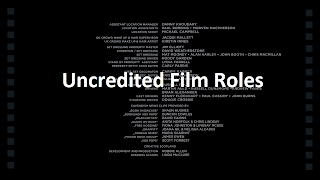
WHY DO ACTORS TAKE UNCREDITED ROLES? (In the Entertainment industry.)

Film Billing Credits / Photo Credit: Studio Binder – Bruce Bisbey WHY DO ACTORS TAKE UNCREDITED ROLES? (In the Entertainment industry....