SUN TZU QUOTES'..."You have to believe in yourself."

Dumb Dog Production is a full-service Film Production Company. We hope you find the site informational and answers any questions you might have about the entertainment industry.

We do not claim that this site is a be all and means to an end, but to help guide and learn how the entertainment industry work.

Please do not hesitate to contact us for any questions.

Thank you,

Sherri (Bisbey) Rowe / Bruce Bisbey / James Bisbey

Email: brucedumbdog@gmail.com Dumb Dog Production Phone: +1 319-930-7978 Dumb Dog Productions LLC / Bus Lic.: 5084725 https://dumbdogproductions.com/ https://dumbdogproductionsllc.blogspot.com/ https://www.facebook.com/DumbDogProductionsLLC/

Wednesday, August 22, 2018

WHAT DOES A KEY GRIP DO? (In the Entertainment industry. What Does A Key Grip Do?)

Grips and Grips Equipment / Photo Credit: Knight Grips


WHAT DOES A KEY GRIP DO? (In the Entertainment industry. What Does A Key Grip Do?)


What Does A Key Grip Do?

Best guess is the term “grip” comes from the old English theater, and referred to a tool bag or “bag of tricks.” When someone called for the grip, a technician would fetch the bag. Over time, “get the grip” was a call for the person with the grip, and eventually the term stuck to that technician. In American theater the term is long forgotten, but it has translated into film and television production. The grip is now an on-set technician who is concerned with camera movement equipment and cutting or diffusing light to create shadow. The head of this department is the key grip.

In the U.S. and Canada, grips are technicians in the filmmaking and video production industries. They constitute their own department on a film set and are directed by a key grip. Grips have two main functions. The first is to work closely with the camera department to provide camera support, especially if the camera is mounted to a dolly, crane, or in an unusual position, such as the top of a ladder. Some grips may specialize in operating camera dollies or camera cranes. The second main function of grips is to work closely with the electrical department to create lighting set-ups necessary for a shot under the direction of the director of photography.

Duties

Before filming begins, the key grip attends location scouts and meets the director of photography to determine what additional tools (location-specific motor vehicles, dollies, cranes, mounts, etc.) will be needed, orders and prepares required equipment, and transports equipment to the filming location. Once on set, the key grip coordinates with the electric and camera departments alongside the director of photography to control lighting and camera movement and setup. As a supervisor, the key grip directs the crew of grips, many with specialized skills such as dolly grips, crane operators, or special equipment operators. The key grip is sometimes credited as the "first company grip."

The key grip works for the director of photography (DP) and supervises the crew of grips responsible for camera equipment and accessories and anything associated with the camera’s operation and movement, as well as anything that cuts or diffuses the lamps set up by the gaffer’s crew. He or she attends preproduction meetings with the director, producers, DP, and location scout to determine what special equipment may be needed during the shoot, then works closely with the gaffer on-set to supervise the positioning of scrims, reflectors, and flags that diffuse light and create shadow. During the shoot, the key grip will also assign grips to oversee camera movements that require dollies or cranes, as well as managing set operations like the movement of wild walls. Once the set is built and has been photographed, it is no longer the responsibility of the construction crew, but the grip department. Because they are in charge of all rigging, the grip department is responsible for safety on-set, and the key grip can be taken to court if an accident happens.

On large productions the key grip will have a best boy grip (male or female), who is the second in command, and a crew of grips who are highly specialized in specific tasks: set ops grip, dolly grip, construction grips, and crane operator. On very small shoots, the key grip may function as part of the crew, but generally this is only a supervisory role—the heavy lifting and laying of track is left to the grips. Most key grips will have at least some of their own grip equipment. A key grip often has his or her own grip truck, and will rent it to the production he or she is working on.

Skills & Education
A college degree is not required in this role, but training is. A degree in film and television production can introduce you to the filming process, the use of grip and camera equipment, and the artistic theory of photography. As a key grip you need to be mechanically inclined, with an excellent understanding of light, color, and electricity. Most working key grips are members of IATSE (International Alliance of Theatrical Stage Employees), which offers apprentice-training programs. Working as a grip on union productions is the only way to make the move up to key grip. Commercial or residential construction experience is also useful toward this role, as many working in the grip department have made the leap to film and television production through friends and close contacts.

What to Expect
This is a freelance position that requires long hours, travel, and (sometimes) manual labor. A good key grip is an effective leader, an excellent communicator, and a creative problem-solver. You are expected to be just as good at taking orders as you are giving them. You must be well-organized and great strategic planner, and comfortable with the great responsibility: The key grip is liable if someone is injured on the set. A key grip needs to be flexible and highly adaptable; locations, crews, and working conditions are constantly in flux. Keep in mind that in the production business, you are only as good as your last gig. As with most film production jobs, you will usually be hired again and again by the same handful of people, but every new job is another audition screw up on one and you may not be hired on the next. Once a best boy rises to the rank of key grip, he or she can work toward building a career in big-budget films and major studio productions or aim higher to try to become a DP.

Sources, References & Credits: Google, Wikipedia, Wikihow, WikiBooks, Pinterest, IMDB, Linked In, Indie Wire, Film Making Stuff, Hiive, Film Daily, New York Film Academy, The Balance, The Numbers, Film Maker, TV Guide Magazine, Media Match, Quora, Creative Skill Set, Investopedia, Variety, No Film School, Daily Variety, The Film Agency, Best Sample Resume, How Stuff Works, Career Trend, Producer's Code of Credits, Truity, Production Hub, Producers Guild of America, Film Connection, Variety, Wolf Crow, Get In Media, Production Beast, Sony Pictures,

THIS ARTICLE IS FOR INFORMATIONAL PURPOSES ONLY. THE INFORMATION IS PROVIDED "AS IS" AND BRUCE BISBEY MAKES NO EXPRESS OR IMPLIED REPRESENTATIONS OR WARRANTIES, INCLUDING WARRANTIES OF PERFORMANCE, MERCHANTABILITY, AND FITNESS FOR A PARTICULAR PURPOSE, REGARDING THIS INFORMATION. BRUCE BISBEY DOES NOT GUARANTEE THE COMPLETENESS, ACCURACY OR TIMELINESS OF THIS INFORMATION. YOUR USE OF THIS INFORMATION IS AT YOUR OWN RISK. YOU ASSUME FULL RESPONSIBILITY AND RISK OF LOSS RESULTING FROM THE USE OF THIS INFORMATION. BRUCE BISBEY WILL NOT BE LIABLE FOR ANY DIRECT, SPECIAL, INDIRECT, INCIDENTAL, CONSEQUENTIAL OR PUNITIVE DAMAGES OR ANY OTHER DAMAGES WHATSOEVER, WHETHER IN AN ACTION BASED UPON A STATUTE, CONTRACT, TORT (INCLUDING, WITHOUT LIMITATION NEGLIGENCE) OR OTHERWISE, RELATING TO THE USE OF THIS INFORMATION.

Grips and Grips Equipment / Photo Credit: Knight Grips

Tuesday, August 21, 2018

WHAT DOES A KEY COSTUMER DO? (In the Entertainment industry. What Does A Key Costumer Do?)

Costume Department / Photo Credit: Don't Shoot the Costumer - Word Press


WHAT DOES A KEY COSTUMER DO? (In the Entertainment industry. What Does A Key Costumer Do?)


What Does A Key Costumer Do?

The key costumer is responsible for supervising the on-set activities of the wardrobe department, including managing personnel and maintaining the costume designer’s artistic vision.

Duties
Before principal photography, the key costumer works closely with the costume designer to assign garments to each character and complete the script breakdown. He or she should be intimately familiar with the wardrobe needs of each scene and the necessary evolution of the costumes. When a character wears an outfit through a series of narrow escapes and brushes with fiery death, that outfit will incur wear and tear: bloodstains, dirt, holes. The wardrobe department is responsible for providing as many copies of the same clothes as needed for the various scenes (which will not be shot in chronological order) showing appropriate damage or wear.

Once shooting has commenced, the key costumer is charged with ensuring that all garments are worn and assigned to the cast as intended by the designer. He or she must maintain continuity between scenes and see that all wardrobe is camera ready before the take begins. This person supervises the staff of assistants that dress the actors and attend to emergency repairs between scenes. He or she is also tasked with ordering expendables and equipment necessary to the on-set crew, like sewing machines, repair materials, and distressing tools. In accordance with the preliminary budget set forth by the costume designer, the key costumer must monitor spending and submit weekly expense reports to the line producer (or unit production manager), along with the crew’s payroll. When necessary, this person has the authority to hire additional daily crew, and to dismiss staff under his or her supervision.

Skills & Education
A formal education is not required, but proven skill in the design and construction of clothing is expected. A college degree in fashion design, film and television production, or theatrical design is applicable to this career field. Most important is the demonstrated ability to manage a high volume of cast, crew, and wardrobe inventory, and accurately adhere to a costume designer’s instructions. The key costumer must have a meticulous attention to detail, as not a single earring or bracelet should be confused between the leading lady and supporting actress. Also necessary is the thorough understanding of the complete production wardrobe process—you must be just as proficient at sewing and dyeing fabric as you are at styling an entire horde of background players.

What to Expect
The better part of your day will be spent on set, styling extras, taking photos of scenes for continuity, and perhaps dressing the principal players. Celebrity actors are notoriously fussy about who sees them in their unmentionables, so it is common for these individuals to insist on a trusted personal costumer. Dealing with difficult personalities, actors who have lost or gained weight since fittings, and garments that mysteriously disappear is all part of the gig. It is your job to have a plan for every contingency and to keep the department running smoothly. In the inevitable case where an actor refuses to wear a particular design or the director suddenly hates the zipper on the dress he approved three months ago, you must be prepared to strike a compromise that still stands by the designer’s intended aesthetic.

Sources, References & Credits: Google, Wikipedia, Wikihow, WikiBooks, Pinterest, IMDB, Linked In, Indie Wire, Film Making Stuff, Hiive, Film Daily, New York Film Academy, The Balance, The Numbers, Film Maker, TV Guide Magazine, Media Match, Quora, Creative Skill Set, Investopedia, Variety, No Film School, Daily Variety, The Film Agency, Best Sample Resume, How Stuff Works, Career Trend, Producer's Code of Credits, Truity, Production Hub, Producers Guild of America, Film Connection, Variety, Wolf Crow, Get In Media, Production Beast, Sony Pictures,

THIS ARTICLE IS FOR INFORMATIONAL PURPOSES ONLY. THE INFORMATION IS PROVIDED "AS IS" AND BRUCE BISBEY MAKES NO EXPRESS OR IMPLIED REPRESENTATIONS OR WARRANTIES, INCLUDING WARRANTIES OF PERFORMANCE, MERCHANTABILITY, AND FITNESS FOR A PARTICULAR PURPOSE, REGARDING THIS INFORMATION. BRUCE BISBEY DOES NOT GUARANTEE THE COMPLETENESS, ACCURACY OR TIMELINESS OF THIS INFORMATION. YOUR USE OF THIS INFORMATION IS AT YOUR OWN RISK. YOU ASSUME FULL RESPONSIBILITY AND RISK OF LOSS RESULTING FROM THE USE OF THIS INFORMATION. BRUCE BISBEY WILL NOT BE LIABLE FOR ANY DIRECT, SPECIAL, INDIRECT, INCIDENTAL, CONSEQUENTIAL OR PUNITIVE DAMAGES OR ANY OTHER DAMAGES WHATSOEVER, WHETHER IN AN ACTION BASED UPON A STATUTE, CONTRACT, TORT (INCLUDING, WITHOUT LIMITATION NEGLIGENCE) OR OTHERWISE, RELATING TO THE USE OF THIS INFORMATION.


Costume Department / Photo Credit: Don't Shoot the Costumer - Word Press

Monday, August 20, 2018

WHAT DOES A INTERACTIVE ART DIRECTOR DO? (In the Entertainment industry. What Does A Interactive Art Director Do?)


Gkess Animation / Photo Credit: Paradise in Motion - GKess


WHAT DOES A INTERACTIVE ART DIRECTOR DO? (In the Entertainment industry. What Does A Interactive Art Director Do?)


What Does A Interactive Art Director Do?

A Creative Art Director might be doing anything from building a website to drawing sketches for a video game, but an Interactive Art Director is probably going to be designing web and mobile content more than anything else, and no matter how good it looks, if it doesn't get your users where they want to go, then you shouldn't expect too much in the way of creative job placement. All Creative Art Directors have final say in the aesthetic presentation of a project, but an Interactive Art Director needs to figure out how to adjust that to the user's needs.

With an increasingly saturated online advertising market more fields in this versatile industry emerge demanding for more specialization. Art direction for online media is relatively rare as art directors normally don’t specialize in one particular media. The reason for this newly emerged role however is justified by the fact that a campaign conceptualized for a print or TV format cannot easily be translated into online environments. Time and space constraints are very different and also do technical possibilities offer more than a one-way communication of traditional media. Personalization of messages and social interaction between companies and consumers require an in depth knowledge of technological possibilities. Technology is therefore central in forming concepts online.

The ways that consumers choose to interact with media are changing and evolving at a more accelerated pace than ever before. To stay relevant and better engage with consumers, entertainment media companies employ artists and web developers who have the talent and expertise to produce new, innovative web products.

Duties
The interactive art director takes the lead role in the research, development, and launch of new web-based products and services meant to serve the marketing and promotional goals of the company. This person will supervise a staff of graphic designers, who specialize in online content creation and closely collaborate with web developers to prototype then deploy a wide range of interactive properties. Among the assets under the purview of the interactive art director are websites, mobile applications, and widgets that are developed for social networking sites. In coordination with product managers and the marketing department, this person identifies a strategy by which an online product can benefit a particular brand, such as a film, video game, or album. The art director will outline the goals of the project and then create design documentation and prototype procedures that he or she delivers to the development staff. Several iterations are necessary before a final concept is ready for production.

Responsible for establishing the overall look of the project, the interactive art director will assign art content creation tasks to the graphic design staff and communicate with web developers to ensure compatibility of design and platform. This person must publish staff schedules and account for development hours. Depending on the specific needs of the product, asset creation may include the use of programs like Photoshop and Illustrator or dictate the production of video and audio. It will be the responsibility of the art director to contract with vendors for the production of assets outside of the department’s capabilities or in such cases that additional staff is necessary. He or she will see that the finished property is deliverable on time and present the result for senior company managers. After receiving approval, the interactive art director will supervise the launch of the property.

Skills & Education
An individual holding this position should demonstrate considerable talent for traditional art, as well as a command of graphic design software. Necessary proficiency includes Adobe products and Flash programs, and knowledge of software such as Maya, 3ds Max or Zbrush is also beneficial. Therefore, a college degree in graphic art and design or fine art is recommended for work as an interactive art director. As familiarity with video production and sound design is also preferred for this role, courses in digital video production and audio engineering are encouraged. It is also helpful to study basic computer programming and the use of HTML and CSS.

What to Expect
The interactive art director is a senior-level creative leader who is capable of effectively leading a development team and clearly outlining goals for all members of the department. He or she is not only responsible for the quality production of art assets and engaging interactive platform, but also for ensuring timely delivery of work and management of numerous projects simultaneously. This person can seek employment by an entertainment company such as a major motion picture studio or record label or work for a third-party development company that caters to the entertainment industry. Those interested in pursuing a career as an interactive art director may gain applicable experience as an advertising art director or art director specializing in video game development. Employment as a graphic designer, web developer, or similar role can lead to advancement to this position.

Sources, References & Credits: Google, Wikipedia, Wikihow, WikiBooks, Pinterest, IMDB, Linked In, Indie Wire, Film Making Stuff, Hiive, Film Daily, New York Film Academy, The Balance, The Numbers, Film Maker, TV Guide Magazine, Media Match, Quora, Creative Skill Set, Investopedia, Variety, No Film School, Daily Variety, The Film Agency, Best Sample Resume, How Stuff Works, Career Trend, Producer's Code of Credits, Truity, Production Hub, Producers Guild of America, Film Connection, Variety, Wolf Crow, Get In Media, Production Beast, Sony Pictures,

THIS ARTICLE IS FOR INFORMATIONAL PURPOSES ONLY. THE INFORMATION IS PROVIDED "AS IS" AND BRUCE BISBEY MAKES NO EXPRESS OR IMPLIED REPRESENTATIONS OR WARRANTIES, INCLUDING WARRANTIES OF PERFORMANCE, MERCHANTABILITY, AND FITNESS FOR A PARTICULAR PURPOSE, REGARDING THIS INFORMATION. BRUCE BISBEY DOES NOT GUARANTEE THE COMPLETENESS, ACCURACY OR TIMELINESS OF THIS INFORMATION. YOUR USE OF THIS INFORMATION IS AT YOUR OWN RISK. YOU ASSUME FULL RESPONSIBILITY AND RISK OF LOSS RESULTING FROM THE USE OF THIS INFORMATION. BRUCE BISBEY WILL NOT BE LIABLE FOR ANY DIRECT, SPECIAL, INDIRECT, INCIDENTAL, CONSEQUENTIAL OR PUNITIVE DAMAGES OR ANY OTHER DAMAGES WHATSOEVER, WHETHER IN AN ACTION BASED UPON A STATUTE, CONTRACT, TORT (INCLUDING, WITHOUT LIMITATION NEGLIGENCE) OR OTHERWISE, RELATING TO THE USE OF THIS INFORMATION.

Gkess Animation / Photo Credit: Paradise in Motion - GKess

WHAT DOES A HAIRSTYLIST DO? (In the Entertainment industry. What Does A Hairstylist Do?)

Hair Styling Equipment / Photo Credit: Dyson Hairdryers - Evening Standard


WHAT DOES A HAIRSTYLIST DO? (In the Entertainment industry. What Does A Hairstylist Do?)


What Does A Hairstylist Do?

Hairstylist / Hairdressers work closely with colleagues in the Hair, Make-up and Costume Departments, as well as with Directors, Actors and extras. They are briefed by Heads of Department (either the Make-up and Hair Designer, or the Chief Hairdresser) who provide them with detailed continuity notes for the characters they create. They work on principal and supporting Actors and, depending on the schedule, usually look after several Actors throughout the shoot.

Personal Hairdressers are specifically requested by one of the principal Actors to work exclusively on their hair, and they have autonomy within the department. They work closely with the Chief dresser, and are responsible for breaking down the script, all hairdressing requirements, and monitoring the continuity of hair for their own Actor, throughout each production. They attend any wig and/or hair piece fittings with their artists. 

Daily Film Hairdressers (dailies) work on productions on a day-to-day basis, usually on large crowd scenes. In all cases, Hairdressers prepare performers' hair and scalp in advance, note any allergies or sensitivities and report them to appropriately qualified personnel. They may be required to use chemical solutions, and to administer hair and scalp treatments. They wash, cut, blow-dry and style hair, apply hair products and use techniques to create specific designs. They repair, alter and dress wigs and hairpieces.

They oversee hair continuity during shoots, accompanying their performers onto set. They standby during their scenes, touching up hair and redressing wigs between takes, and ensuring that continuity notes are maintained by taking length measurements and photographs. When the scenes have been shot, Hairdressers wash out products from, and condition, performers' hair. They remove wigs, and ensure that they are cleaned and prepared for further use. Hairdressers may be required to assist with any subsequent publicity shots.

Hairdressers are recruited onto films during pre-production and work throughout production, usually on a freelance basis.  The hours are long and the job can involve long periods working away from home. 

With the flick of a comb, a hairstylist can characterize, set a time period or even illuminate a theme. Successful hairstyles can evoke a sense of drama or even comedy. They can be tied to certain eras and even to certain celebrities. Because of this, it cannot be understated how important hair is to a star’s image, and subsequently, the films and television shows in which he or she appears. Just imagine the actor playing Wolverine with a Justin Beiber cut. To make sure that actors, actresses, and the characters they portray are properly done up according to the project’s needs, hairstylists are on the job.

Duties
The job duties of a hairstylist seem pretty straightforward: to take care of the hair of actors and actresses in film, television, and commercials by washing, drying, cutting, and otherwise styling. However simple this may seem, there are many intricacies that make the job slightly more involved than merely combing and brushing. Hairstylists work closely with the directors, as well as with makeup and costume departments, to help create a seamless image for characters through all their physical characteristics. They prepare the scalp and skin of actors and actresses, work with wigs, hairpieces, and extensions when needed, and often turn to chemicals and scalp treatments to achieve the desired hair effects. Another important part of the job is maintaining hair continuity throughout the shoot, which includes a great deal of touching and retouching during the shoot itself. Hairstylists work within the hair department and are often brought in during pre-production to determine how they will be performing their tasks during the shoot. Often, hairstylists will also work exclusively with the principal actors or actresses on the film, following them during the shoot to make sure their hair is always the way it needs to be. In addition to making sure an actor’s or actress’s hair is perfect for what is needed on set, the hairdresser also sees to it that all products, chemicals, and other funky do’s are washed away and dried at the end of the day. 

Skills & Education
Hairstylists for film and television must first have strong skills. There are many cosmetology and beauty schools that give hairstylists the opportunity to learn and perfect their craft, and many film hairstylists get their starts in salons. Obviously, a talent for hair styling is paramount and this often necessitates knowledge of hair design, coloring, technology, and artistry. All are equally important to become a successful hairstylist. The ability to communicate well, understand directions, and work independently as well as on teams are also attractive qualities in a hairstylist. An eye for detail is one of the most critical requirements for hairstylists, since their work helps to define the image of the character, and thus must maintain continuity throughout the shoot, which is sometimes easier said than done.

What to Expect
Hairstylists can often expect to form close relationships with certain actors and actresses, since celebrities commonly develop loyalty to stylists who successfully manage their looks. Because appearance is such a vital part of an actor’s profession, their hairstylists must be aware of any allergies the actors and actresses may have to chemicals and be prepared to handle diva behavior. Then, of course, hairstylists also get the perk of high praise for making an insecure starlet feel confidently coiffed. Becoming a personal hairstylist for individual actors or actresses is not uncommon, and this is a highly coveted position that brings with it greater autonomy and with it greater success. As with many of the careers in makeup and hair, hairstylists can expect long hours on the set and lots of freelance work. The beauty of being a hairstylist for films is that when the shoot is over, you can always return to the salon and continue styling the hair of all the actors and actresses you’ve already impressed.

Sources, References & Credits: Google, Wikipedia, Wikihow, WikiBooks, Pinterest, IMDB, Linked In, Indie Wire, Film Making Stuff, Hiive, Film Daily, New York Film Academy, The Balance, The Numbers, Film Maker, TV Guide Magazine, Media Match, Quora, Creative Skill Set, Investopedia, Variety, No Film School, Daily Variety, The Film Agency, Best Sample Resume, How Stuff Works, Career Trend, Producer's Code of Credits, Truity, Production Hub, Producers Guild of America, Film Connection, Variety, Wolf Crow, Get In Media, Production Beast, Sony Pictures,

THIS ARTICLE IS FOR INFORMATIONAL PURPOSES ONLY. THE INFORMATION IS PROVIDED "AS IS" AND BRUCE BISBEY MAKES NO EXPRESS OR IMPLIED REPRESENTATIONS OR WARRANTIES, INCLUDING WARRANTIES OF PERFORMANCE, MERCHANTABILITY, AND FITNESS FOR A PARTICULAR PURPOSE, REGARDING THIS INFORMATION. BRUCE BISBEY DOES NOT GUARANTEE THE COMPLETENESS, ACCURACY OR TIMELINESS OF THIS INFORMATION. YOUR USE OF THIS INFORMATION IS AT YOUR OWN RISK. YOU ASSUME FULL RESPONSIBILITY AND RISK OF LOSS RESULTING FROM THE USE OF THIS INFORMATION. BRUCE BISBEY WILL NOT BE LIABLE FOR ANY DIRECT, SPECIAL, INDIRECT, INCIDENTAL, CONSEQUENTIAL OR PUNITIVE DAMAGES OR ANY OTHER DAMAGES WHATSOEVER, WHETHER IN AN ACTION BASED UPON A STATUTE, CONTRACT, TORT (INCLUDING, WITHOUT LIMITATION NEGLIGENCE) OR OTHERWISE, RELATING TO THE USE OF THIS INFORMATION.


Hair Styling Equipment / Photo Credit: Dyson Hairdryers - Evening Standard

Saturday, August 18, 2018

WHAT DOES A GRIP DO? (In the Entertainment industry. What Does A Grip Do?)

Grip Alamo Filming / Photo Credit: Premium Beat


WHAT DOES A GRIP DO? (In the Entertainment industry. What Does A Grip Do?)


What Does A Grip Do?

Grips are the “make it work” people. They are trained in the art of pulling solutions out of thin air. The grip department, as its namesake indicates, is the keeper of the bag of tricks, and good grips have a gadget or gizmo for every potential need—or they can bend, twist, or cut something to work. Primarily the grip department is concerned with cutting light (the saying goes that electricians make the light and grips make the shadows) and facilitating camera movement. Grips also move set pieces, hang lights, lay dolly tracks, rig camera cranes, and spot camera operators.

In the U.S. and Canada, grips are technicians in the filmmaking and video production industries. They constitute their own department on a film set and are directed by a key grip. Grips have two main functions. The first is to work closely with the camera department to provide camera support, especially if the camera is mounted to a dolly, crane, or in an unusual position, such as the top of a ladder. Some grips may specialize in operating camera dollies or camera cranes. The second main function of grips is to work closely with the electrical department to create lighting set-ups necessary for a shot under the direction of the director of photography.

In the UK, Australia and most parts of Europe, grips are not involved in lighting. In the "British System", adopted throughout Europe and the British Commonwealth (excluding Canada), a grip is solely responsible for camera mounting and support.

The term "grip" is from the early era of the circus. From there it was used in vaudeville and then in today’s film sound stages and sets. Some have suggested the name comes from the 1930s–40s slang term for a tool bag or "grip" that these technicians use to carry their tools. Another theory is that in the days of hand-cranked cameras, it was necessary for a few burly men to hang onto the tripod legs to stop excessive movement of the camera. These men became known as the "good grips"—as they were constantly being instructed to "keep a good grip on the tripod".

US grips typically belong to the International Alliance of Theatrical Stage Employees (IATSE). Canadian grips may also belong to IATSE or to Canada's other professional trade unions including Toronto's Nabet 700, or Vancouver's ACFC. British grips usually belong to BECTU (Broadcasting Entertainment Cinematograph & Theatre Union).

Grips work closely with the Director, Director of Photography (DoP) and the Camera Operator to make sure the position or movement of cameras is achievable.

They usually push the Dolly (the wheeled platform which carries the camera and the Camera Operator) with smooth movements that do not distract from the onscreen action.

On large projects with multiple cameras, the Key Grip is responsible for the main camera (camera A), with other Grips providing additional camera support.

Grips begin work in the later stages of preproduction, when they join all other Heads of Department to carry out a technical recce. If needed, Grips work with specialist companies to devise tailor–made pieces of equipment for difficult camera maneuver’s which are sometimes performed on location in extreme terrain and/or severe weather.

During shooting days, Grips and their team (which may include other Grips, a Remote Head technician, a Crane Operator, tracking car drivers, and all construction standbys) arrive on set early, unload all the equipment, and ensure that everything is prepared for the day's filming.

After the Director has rehearsed the actors and all the shots are choreographed, Grips set up any required equipment. Whenever a crane is used, at least two Grips are employed, working with the Crane Operator to mount and move the camera.

Grips should be ready as soon as the camera starts to roll, and they must anticipate all the camera moves, whilst also keeping in mind the preparations required for the next camera set–up. At the end of each day's shooting, Grips oversee the packing up of all camera–support equipment.

Grips are usually asked for by the DoP or the Camera Operator. Although the work is physically demanding and the hours are long, it can be very rewarding. Many Grips work on both commercials and features.

Duties
A grip can be specialized, like a dolly grip or crane operator, or a generalist. In either case, the grip answers to the best boy grip and key grip. A set ops grip helps achieve desired lighting conditions by setting flags and bounces. Larger productions will have a specific technician (the dolly grip) responsible for operating the moving camera platform (the dolly). Rigging grips assist in the setup of lighting effects, work with the leadsman under the direction of the construction coordinator on scenery and sets, and pre rig camera and crane setups. During photography this person works under the direction of the key grip.

Maintenance, repair, and inventory control of grip department gear—C-stands, chromakey backdrops, flags, plates, cable, jibs, and track—is the job of the best boy grip (or, on smaller productions, the second grip). An entry-level grip is someone with a general knowledge of the department who is capable of stepping in to any of the roles under the best boy grip, and helps out where needed—loading and lugging gear, building catwalk, flying drops, striking setups.

Most important, though, the grip department is responsible for the safety of all rigging on the set. The lights hanging overhead, the backdrops balanced behind the actors, the cameras in midair, ramps stunt performers launch themselves off—grips rig all of these, and everyone on the set puts their trust in this crew’s careful work.

Skills & Education
A film and television production degree is not required, though training is a must. Grips are responsible for hundreds of pieces of equipment; production courses are worth it just to learn the terminology. If you don’t know the difference between a cucoloris and a floppy meat axe, maybe you should consider taking a few courses in production process and cinematography. Most universities and community colleges offer film/TV programs, IATSE has a limited-access apprentice program, and industry workshops can offer a preliminary introduction to the duties of the grip department. A grip should be mechanically inclined and understand electricity, lighting, and color. Many working grips have a professional background in commercial or residential construction, and they must have extensive safety training.

What to Expect
This crew does a lot of heavy lifting and manual labor. Safety is always the first priority for a grip; if a crane or set piece comes down, the key grip may face serious legal consequences. You must be comfortable with long hours, travel, and working in all weather conditions. The charisma to develop good working relationships with all types of people is imperative for this freelancer. Most of all, a strong work ethic is a must—the lazy need not apply. Grips are right in the thick of the production process and have significant opportunities to work closely with DPs, ADs, and other production staff. A grip with a hefty résumé of credits can move up to become best boy grip, key grip, or eventually a DP.

Sources, References & Credits: Google, Wikipedia, Wikihow, WikiBooks, Pinterest, IMDB, Linked In, Indie Wire, Film Making Stuff, Hiive, Film Daily, New York Film Academy, The Balance, The Numbers, Film Maker, TV Guide Magazine, Media Match, Quora, Creative Skill Set, Investopedia, Variety, No Film School, Daily Variety, The Film Agency, Best Sample Resume, How Stuff Works, Career Trend, Producer's Code of Credits, Truity, Production Hub, Producers Guild of America, Film Connection, Variety, Wolf Crow, Get In Media, Production Beast, Sony Pictures, Ella Laryen,

THIS ARTICLE IS FOR INFORMATIONAL PURPOSES ONLY. THE INFORMATION IS PROVIDED "AS IS" AND BRUCE BISBEY MAKES NO EXPRESS OR IMPLIED REPRESENTATIONS OR WARRANTIES, INCLUDING WARRANTIES OF PERFORMANCE, MERCHANTABILITY, AND FITNESS FOR A PARTICULAR PURPOSE, REGARDING THIS INFORMATION. BRUCE BISBEY DOES NOT GUARANTEE THE COMPLETENESS, ACCURACY OR TIMELINESS OF THIS INFORMATION. YOUR USE OF THIS INFORMATION IS AT YOUR OWN RISK. YOU ASSUME FULL RESPONSIBILITY AND RISK OF LOSS RESULTING FROM THE USE OF THIS INFORMATION. BRUCE BISBEY WILL NOT BE LIABLE FOR ANY DIRECT, SPECIAL, INDIRECT, INCIDENTAL, CONSEQUENTIAL OR PUNITIVE DAMAGES OR ANY OTHER DAMAGES WHATSOEVER, WHETHER IN AN ACTION BASED UPON A STATUTE, CONTRACT, TORT (INCLUDING, WITHOUT LIMITATION NEGLIGENCE) OR OTHERWISE, RELATING TO THE USE OF THIS INFORMATION.

Grip Alamo Filming / Photo Credit: Premium Beat

Friday, August 17, 2018

WHAT DOES A GREENSMAN DO? (In the Entertainment industry. What Does A Greensman Do?)

Jungle Tree Set / Photo Credit: Cheatsheet – Getty Images


WHAT DOES A GREENSMAN DO? (In the Entertainment industry. What Does A Greensman Do?)


What Does A Greensman Do?

Greensmen are specialist advisors who are hired depending on the production budget and script requirements. They liaise with Production Designers, and use foliage and greenery to transform a location to fit script requirements, or to build a landscape in a studio. Projects vary enormously depending on individual production requirements. Greensmen may have to outfit a conservatory, landscape the lawns of a period mansion, or create alien swamps.

During pre-production Greensmen are briefed by the Production Designer. They plan how best to execute the designs, and what materials are needed. Greensmen may need to carry out research into the appropriate habitats, plants and foliage for the production. They source and select the plants and materials. They transport them to the location or studio, and build the designs.

Greensmen may have to conceal unwanted location features, known as 'greening out'. Or they may landscape the area. Greensmen may recreate natural environments in studios, or work with the Art Department to create sets where some of the landscape is artificial. This might involve mechanized trees, artificial rocks, rubber plants, silk trees and flowers etc.

As well as being responsible for all foliage and greenery on set, Greensmen also deal with any organic surface treatments, such as sand or forest litters. They may also work with other materials within the landscape (stone walls, wooden fences, etc.). Greensmen must be present during the shoot to ensure the continuity and to care for any plants that need regular watering or feeding. After the shoot, Greensmen dismantle the environment, and return the plants and materials to their sources.

Greensmen work long and irregular hours, in all kinds of weather and terrain. On large-scale productions, Greensmen may oversee a team which includes Greens Foremen*, Standby Greensmen*, and Nurserymen*.

When Marlon Brando clutched his heart and staggered to the ground in The Godfather, surrounded by his cherished tomato plants, did you ever spare a thought to wonder who actually maintained the Don’s famous garden? It was the work of a greensman, the member of the film crew with a green thumb who procures, places, and looks after any vegetation on the film set. Working with real or artificial landscaping, the greensman works to make a lowly patch of dirt look like the Garden of Eden and a mundane Hollywood backlot look like an alien rainforest.

Duties
First and foremost, a greensman— so-called whether male or female—is a horticultural expert, a set dresser with a specialized skill. He or she uses that expertise to create landscapes from the ground up, to decorate interiors with plants and flowers, or to beef up lawns and gardens with extra plants to suit the requirements of the production designer and the script. The main responsibility is to obtain greenery, which can be live or artificial; after obtaining the appropriate plants, the greensman then places them according to specifications; finally, the greensman maintain the vegetation throughout the shoot, making sure that it retains its appearance, color, and health so that continuity is preserved.

In preproduction, greensmen meet with the production designer to plan the designs and how to execute them, and do research into habitats and plant hardiness. Preproduction also includes the procurement and transportation of the vegetation itself and the necessary materials to maintain it: soil, fertilizer, tools. On location, greensmen take on traditional landscaping duties and “greening out,” or concealing unwanted parts of a location or studio. Sometimes they work with members of the art department to create artificial rocks, plants, trees, or flowers, as well as creating soils and forest litter and other elements present in conventional landscaping. Maintenance continues throughout the shoot, watering and feeding the plants; after shooting, the landscaping and artificial environments are dismantled. Once the plants and materials are returned to the appropriate sources, the job is done.

Skills & Education
A career as a greensman may not require a college degree, but it requires an extensive skill set, including a keen attention to detail, understanding of the filmmaking process, physical strength and stamina, and most of all, excellent horticultural knowledge and abilities. Greensmen are an important part of the art department, and as such have creative skills that allow them to create extremely realistic environments with their vegetation and other materials. Collaborating with the production designer and members of the art department from fabricators and sculptors to painters makes communication skills necessary, and greensmen are part of teams that require not only the ability to take orders but to give them. Besides expert knowledge of plants, gardening, landscaping, and tree surgery, greensmen commonly have masonry skills, woodworking abilities, and experience making artificial foliage. Many are licensed to drive trucks, forklifts, and Bobcats and have certification to work with hazardous materials.

What to Expect
Greensmen can expect to get dirty and work hard; some consider this the dirtiest job in the film industry. You will rarely get a break during shoots and will often be among the first to arrive and the last to leave; irregular and long hours are common, as well as working in inclement weather. The duties will vary greatly depending on the budgets and requirements of productions: You may have to provide daisies for the planter in front of the main character’s apartment, redo the landscaping on the expansive grounds of a Victorian mansion, or turn a planetarium into an alien environment using a combination of real and fake vegetation. Expect to provide your own tools and pair of gloves; the only thing you really cannot expect as a greensman is to keep clean, but that’s just part of the job.

Sources, References & Credits: Google, Wikipedia, Wikihow, WikiBooks, Pinterest, IMDB, Linked In, Indie Wire, Film Making Stuff, Hiive, Film Daily, New York Film Academy, The Balance, The Numbers, Film Maker, TV Guide Magazine, Media Match, Quora, Creative Skill Set, Investopedia, Variety, No Film School, Daily Variety, The Film Agency, Best Sample Resume, How Stuff Works, Career Trend, Producer's Code of Credits, Truity, Production Hub, Producers Guild of America, Film Connection, Variety, Wolf Crow, Get In Media, Production Beast, Sony Pictures, Ella Laryen,

THIS ARTICLE IS FOR INFORMATIONAL PURPOSES ONLY. THE INFORMATION IS PROVIDED "AS IS" AND BRUCE BISBEY MAKES NO EXPRESS OR IMPLIED REPRESENTATIONS OR WARRANTIES, INCLUDING WARRANTIES OF PERFORMANCE, MERCHANTABILITY, AND FITNESS FOR A PARTICULAR PURPOSE, REGARDING THIS INFORMATION. BRUCE BISBEY DOES NOT GUARANTEE THE COMPLETENESS, ACCURACY OR TIMELINESS OF THIS INFORMATION. YOUR USE OF THIS INFORMATION IS AT YOUR OWN RISK. YOU ASSUME FULL RESPONSIBILITY AND RISK OF LOSS RESULTING FROM THE USE OF THIS INFORMATION. BRUCE BISBEY WILL NOT BE LIABLE FOR ANY DIRECT, SPECIAL, INDIRECT, INCIDENTAL, CONSEQUENTIAL OR PUNITIVE DAMAGES OR ANY OTHER DAMAGES WHATSOEVER, WHETHER IN AN ACTION BASED UPON A STATUTE, CONTRACT, TORT (INCLUDING, WITHOUT LIMITATION NEGLIGENCE) OR OTHERWISE, RELATING TO THE USE OF THIS INFORMATION.


Jungle Tree Set / Photo Credit: Cheatsheet – Getty Images

Thursday, August 16, 2018

WHAT DOES A GRAPHIC DESIGNER DO? (In the Entertainment industry. What Does A Graphic Designer Do?)

Graphic Designers Workstation / Photo Credit: Mulligan Design - Joy Studio


WHAT DOES A GRAPHIC DESIGNER DO? (In the Entertainment industry. What Does A Graphic Designer Do?)


What Does A Graphic Designer Do?

Across the full spectrum of the entertainment and media industries, there is a need for graphic designers to produce original art to be used for advertising, marketing, promotions, and PR materials. From movie posters to album covers and video game packaging to websites, striking visual collateral is essential to culling an audience.

Graphic Artists produce all the props that contain graphic (written) items, e.g. money, newspapers, magazines, handwritten or typed letters, musical scores, books, maps, shop signage, menus, credit cards, passports, etc. They work closely with the Production Designer, Props Master, Standby Props, and Art Director(s).

If they are responsible for making an important action or “hero” prop, which will be on screen for a large part of the film, they often meet with the Director during pre-production to discuss exact requirements. They may spend six weeks working on four duplicate copies of one “hero” prop (e.g. an ancient book of alchemic signs, which requires them to work closely with a paper specialist, book binder and leather manufacturer and involves a high degree of hand-finish). Otherwise, they usually spend shorter periods of time on numerous dressing props that can be made quickly and used on a number of sets.

Occasionally, if an Actor has to use a prop (e.g. in a period film, the Director may want a shot of the character writing a manuscript), Graphic Artists work with the actor on set, showing them how to write with a quill onto the prop manuscript.

Items are often designed using freehand drawing and calligraphy skills and laid out on a computer using a software package such as Photoshop or Illustrator.

On smaller films, Graphic Artists undertake detailed research, while on big budget films this is carried out by Specialist Researchers. On larger fantasy or sci-fi films, two Graphic Artists may be employed, working closely with the Visual and Special Effects departments to produce special, animated or fantastical items such as animated photographs, flying envelopes, etc.

Graphic Artists must establish and maintain contacts with specialist suppliers of materials such as papers and inks and with reprographic (specialist printing) companies, printers, book binders, etc.

Graphic Artists are usually asked for by the Set Decorator, who has worked with them before, or knows their work by reputation. The job is highly creative but work is irregular, and most Graphic Artists work on a wide range of television, commercials and films. They work on a freelance basis.

Duties
The graphic designer typically works under the direct supervision of the art director, and is responsible for producing art assets and graphic page layouts according to design documentation and notes provided by the client. He or she will participate in concept meetings to understand the product or brand, and collaborate with the art director to come up with a design brief. Some research may be required before determining how to best visually represent a product, and the graphic designer is expected to work within given parameters, which could include mimicking an existing branding style, incorporating existing photos, or integrating required content like logos or specific wording. Working under strict deadlines, this person must deliver several comp versions of the design to the client, which will be reviewed and returned with notes for improvements. When a final design has been approved, the artist will produce refined samples for each medium (billboards, posters, etc.) that will then be reproduced for distribution. With one client satisfied, it’s on to the next project, and the design cycle repeats.

Skills & Education
Artistic talent is a necessity, as is skill in the use of design software like Photoshop, InDesign, and Illustrator. Though finished products are delivered in digital format, the graphic designer is expected to be proficient in traditional art as well; drawing ability should be the core foundation of any graphic designer. A college degree in studio art or graphic design is highly recommended, as are courses in photography, art history, and advertising. Proficiency in web design or graphic design for online media is also a considerable asset. You must be capable of prioritizing multiple tasks, as numerous projects may be dumped in your lap at once. This career demands an individual who is highly organized, detail-oriented, and an excellent communicator.

What to Expect
There is tremendous freedom and variety in a career as a graphic designer; artists have the opportunity to work full-time or freelance, dabbling in film, television, music, games, and live entertainment. Permanent positions exist within advertising and public relations firms, or in-house at a production company, film studio, game developer, or record label. If there is a specific area of the entertainment industry that appeals to you, concentrate your job-hunting efforts on companies that service that sector. Many companies offer internships or entry-level positions in the art department that can lead to full-time employment as a graphic designer. Variety in your portfolio and the ability to work in multiple styles and genres will make you a more valuable asset. A graphic designer is expected to produce material to fit the changing needs of the client, not simply to serve his or her own artistic compulsions.

Sources, References & Credits: Google, Wikipedia, Wikihow, WikiBooks, Pinterest, IMDB, Linked In, Indie Wire, Film Making Stuff, Hiive, Film Daily, New York Film Academy, The Balance, The Numbers, Film Maker, TV Guide Magazine, Media Match, Quora, Creative Skill Set, Investopedia, Variety, No Film School, Daily Variety, The Film Agency, Best Sample Resume, How Stuff Works, Career Trend, Producer's Code of Credits, Truity, Production Hub, Producers Guild of America, Film Connection, Variety, Wolf Crow, Get In Media, Production Beast, Sony Pictures, Ella Laryen,

THIS ARTICLE IS FOR INFORMATIONAL PURPOSES ONLY. THE INFORMATION IS PROVIDED "AS IS" AND BRUCE BISBEY MAKES NO EXPRESS OR IMPLIED REPRESENTATIONS OR WARRANTIES, INCLUDING WARRANTIES OF PERFORMANCE, MERCHANTABILITY, AND FITNESS FOR A PARTICULAR PURPOSE, REGARDING THIS INFORMATION. BRUCE BISBEY DOES NOT GUARANTEE THE COMPLETENESS, ACCURACY OR TIMELINESS OF THIS INFORMATION. YOUR USE OF THIS INFORMATION IS AT YOUR OWN RISK. YOU ASSUME FULL RESPONSIBILITY AND RISK OF LOSS RESULTING FROM THE USE OF THIS INFORMATION. BRUCE BISBEY WILL NOT BE LIABLE FOR ANY DIRECT, SPECIAL, INDIRECT, INCIDENTAL, CONSEQUENTIAL OR PUNITIVE DAMAGES OR ANY OTHER DAMAGES WHATSOEVER, WHETHER IN AN ACTION BASED UPON A STATUTE, CONTRACT, TORT (INCLUDING, WITHOUT LIMITATION NEGLIGENCE) OR OTHERWISE, RELATING TO THE USE OF THIS INFORMATION.

Graphic Designers Workstation / Photo Credit: Mulligan Design - Joy Studio

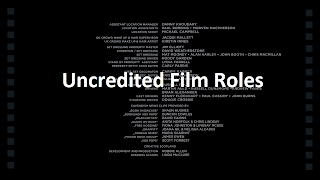
WHY DO ACTORS TAKE UNCREDITED ROLES? (In the Entertainment industry.)

Film Billing Credits / Photo Credit: Studio Binder – Bruce Bisbey WHY DO ACTORS TAKE UNCREDITED ROLES? (In the Entertainment industry....