SUN TZU QUOTES'..."You have to believe in yourself."

Dumb Dog Production is a full-service Film Production Company. We hope you find the site informational and answers any questions you might have about the entertainment industry.

We do not claim that this site is a be all and means to an end, but to help guide and learn how the entertainment industry work.

Please do not hesitate to contact us for any questions.

Thank you,

Sherri (Bisbey) Rowe / Bruce Bisbey / James Bisbey

Email: brucedumbdog@gmail.com Dumb Dog Production Phone: +1 319-930-7978 Dumb Dog Productions LLC / Bus Lic.: 5084725 https://dumbdogproductions.com/ https://dumbdogproductionsllc.blogspot.com/ https://www.facebook.com/DumbDogProductionsLLC/

Monday, November 12, 2018

WHAT DOES A TITLES DESIGNER DO? (In the Entertainment industry.)

Title Design / Photo Credit: Academy Originals - Dan Perri - YouTube


WHAT DOES A TITLES DESIGNER DO? (In the Entertainment industry.)                          


What does a Titles Designer do?      

The titles designer is the artist whose responsibility it is to create the opening titles sequence, as well as intertitles or title cards in the film or television show. He or she also creates the end credits. The opening titles sequence of a film or television show is meant to set the mood for the audience and establish a tone for the presentation to follow. Depending on the budget of the production, this sequence may be very elaborate or quite simple. Distinctive titles sequences can also establish a cohesive brand among several products of the same family, as with the very similar style.

Duties
Film title design is a term describing the craft and design of motion picture title sequences. Since the beginning of the film form, it has been an essential part of any motion picture. Originally a motionless piece of artwork called title art, it slowly evolved into an art form of its own.

In the beginning, main title design consisted of the movie studio's name and/or logo and the presentation of the main characters along with the actor’s names, generally using that same artwork presented on title cards. Most independent or major studio had their own title art logo used as the background for their screen credits and they used it almost exclusively on every movie that they produced.

The titles designer is the artist whose responsibility it is to create the opening titles sequence, as well as intertitles or title cards in the film or television show. He or she also creates the end credits. This artist is typically hired toward the conclusion of principal photography and begins work by meeting with the director and editor to discuss the show’s style, period, and themes. The director may bring to this creative meeting already-formulated ideas about the title sequence, or he or she may give the titles designer plenty of room to offer suggestions. This meeting is only a launch pad for further discussion and revision. One variable that should be nailed down immediately is whether the titles will require animation or shooting of additional live action footage. It may be the designer who is responsible for directing the additional footage.

The titles designer must submit several versions of possible sequence designs for the director’s approval before moving forward on a final composition. The process generally begins with paper-and-pencil sketching and evolves into the creation of original fonts, rough motion graphics, and animatics. Preliminary storyboards or animatics are presented to the director, and if given the green light are refined and built upon to arrive at a final finished product. Of course, this is all much easier said than done; the development process may take several weeks (or months) to complete. The titles designer’s finished work is transferred to digital files on DVD and sent to the editing department to be cut and composited into the film or video.

Skills & Education
A formal education in fine art, graphic design, film and television production, or computer animation is highly recommended. Coursework should be supplemented with courses in digital art, where the individual can become familiar with software applications like Photoshop, After Effects, Maya, and similar products. A titles designer should be as skilled in traditional drawing and painting as in 3-D art and digital techniques. Proficiency with match moving, compositing, and rotoscoping is especially beneficial.

What to Expect
There is no standard path to work as a titles designer, but there is a great deal of variety in the career field. Some designers may work as freelance artists who pitch their ideas to directors via a show reel (or whose agents do so); others may be employed full-time at a visual effects company that caters to the film and television industry. If operating as a freelancer, he or she should possess the necessary expertise to independently complete designs involving animation, graphic design, and the production of live footage. Employees who are part of a larger VFX staff may only be responsible for one facet of the creative design and art, while other specialists on the team will contribute to the project. As stated above, the titles sequence is only part of this artist’s mission—compiling the end credits and captions can be a tedious task that stations the titles designer at a computer for hours. The person in this role should be immensely patient and prefer the backlight of a monitor to the natural light of the outdoors.

Sources, References & Credits: Google, Wikipedia, Wikihow, WikiBooks, Pinterest, IMDB, Linked In, Indie Wire, Film Making Stuff, Hiive, Film Daily, New York Film Academy, The Balance, Careers Hub, The Numbers, Film Maker, TV Guide Magazine, Blurb, Media Match, Quora, Creative Skill Set, Chron, Investopedia, Variety, No Film School, WGA, BBC, Daily Variety, The Film Agency, Best Sample Resume, How Stuff Works, Career Trend, Producer's Code of Credits, Truity, Production Hub, Producers Guild of America, Film Connection, Variety, Wolf Crow, Get In Media, Production Beast, Sony Pictures, Warner Bros, UCAS, Frankenbite, Realty 101, Careers Hub, Sokanu, Raindance, Film Connection,

THIS ARTICLE IS FOR INFORMATIONAL PURPOSES ONLY. THE INFORMATION IS PROVIDED "AS IS" AND BRUCE BISBEY MAKES NO EXPRESS OR IMPLIED REPRESENTATIONS OR WARRANTIES, INCLUDING WARRANTIES OF PERFORMANCE, MERCHANTABILITY, AND FITNESS FOR A PARTICULAR PURPOSE, REGARDING THIS INFORMATION. BRUCE BISBEY DOES NOT GUARANTEE THE COMPLETENESS, ACCURACY OR TIMELINESS OF THIS INFORMATION. YOUR USE OF THIS INFORMATION IS AT YOUR OWN RISK. YOU ASSUME FULL RESPONSIBILITY AND RISK OF LOSS RESULTING FROM THE USE OF THIS INFORMATION. BRUCE BISBEY WILL NOT BE LIABLE FOR ANY DIRECT, SPECIAL, INDIRECT, INCIDENTAL, CONSEQUENTIAL OR PUNITIVE DAMAGES OR ANY OTHER DAMAGES WHATSOEVER, WHETHER IN AN ACTION BASED UPON A STATUTE, CONTRACT, TORT (INCLUDING, WITHOUT LIMITATION NEGLIGENCE) OR OTHERWISE, RELATING TO THE USE OF THIS INFORMATION.


Title Design / Photo Credit: Academy Originals - Dan Perri - YouTube

Sunday, November 11, 2018

WHAT DOES A THEATRICAL MILLINER DO? (In the Entertainment industry.)

Master Millinery / Photo Credit: University of the Arts London

WHAT DOES A THEATRICAL MILLINER DO? (In the Entertainment industry.)                     

What does a Theatrical Milliner do?    

A theatrical milliner is a hat maker who is specifically trained in constructing headwear for the stage or film and television. This person works closely with the costume designer to create character-specific hats, bonnets, and other accessories that further enhance the authenticity of the show and complete the actor’s look.

Duties
Costume designers rely on theatrical milliners, rather than commercial hat makers, because there are a number of specific concerns the milliner must address when producing accessories for a performer. On stage, a wide brim creates hardships for the lighting designer who is trying to bring out the facial expression of the actor; for the sound designer, there are concerns of unwanted sound reflection that are associated with hats that hang over the performer’s face. There are also variables to account for when dressing dancers, as hats must be precisely weighted so as not to hinder the choreography. In fact, the theatrical milliner spends a great deal of time speaking with the performers and other designers to assess issues like accommodating wigs and microphones worn on the face or around the head. The artisan must ensure that the hat, meant to accentuate the actor’s performance, does not become an impediment.

In design meetings with the client, the theatrical milliner reviews the sketches provided, then discusses choices for fabric and other finishes for each hat. At that stage, this person conducts research to identify the techniques used in making traditional hats of that time period and will attempt to closely mimic the authentic fabrics. He or she will then provide the designer with a mock-up that is a close approximation of what the finished product will look like. The craftsperson holds fittings to gather necessary measurements (these may also be provided by the stage manager) and begins the process of constructing each hat from scratch. Milliners do not simply go out and buy a basic hat that can be embellished, these artists take great pains to create original, one-of-a-kind pieces that are individual to the production and exactly match the designer’s vision. When necessary, the designer may provide fabric or small accessories that have been used on the costume and should therefore be matched in the hat. According to the deadline agreed upon, the milliner will deliver the complete order of hats and may participate in first-look fittings with the actors and costume designer and then make any last adjustments to ensure a proper fit.

Skills & Education
As millinery is a specialty within costume design, a college degree in theatrical design is appropriate for this career. Either through college study or employment, the young artist should seek to apprentice under a veteran milliner in order to receive hands-on training in the techniques of the craft. Naturally, this occupation requires a skilled set of hands that are adept at sewing and making patterns. Like all garment construction, millinery demands an individual with a keen attention to detail that is capable of precisely following a designer’s instructions. An extensive knowledge of theatrical production is necessary, and additional courses in fine art and art history are beneficial. This person must be familiar with the proper handling of numerous types of fabric, and the traditional materials of multiple styles of hats.

What to Expect
Theatrical milliners are master craftspeople that have years of experience within their trade. They are also supervisors of the staff of assistants that serve within a third-party millinery studio or the department of a theater’s costume shop. Most often, these individuals begin as stitchers and patternmakers before finding a specialty in millinery. Therefore, it is helpful to gain professional knowledge in numerous areas of costume fabrication. Other relevant entry-level roles include the dyer, painter, costume craftsperson, and first hand. With appropriate experience in one or more of these positions, you may find an available position for an assistant to the milliner, thus allowing you the opportunity to apprentice under the master artist and gain the necessary tools to advance your career.

Sources, References & Credits: Google, Wikipedia, Wikihow, WikiBooks, Pinterest, IMDB, Linked In, Indie Wire, Film Making Stuff, Hiive, Film Daily, New York Film Academy, The Balance, Careers Hub, The Numbers, Film Maker, TV Guide Magazine, Blurb, Media Match, Quora, Creative Skill Set, Chron, Investopedia, Variety, No Film School, WGA, BBC, Daily Variety, The Film Agency, Best Sample Resume, How Stuff Works, Career Trend, Producer's Code of Credits, Truity, Production Hub, Producers Guild of America, Film Connection, Variety, Wolf Crow, Get In Media, Production Beast, Sony Pictures, Warner Bros, UCAS, Frankenbite, Realty 101, Careers Hub, Sokanu, Raindance, Film Connection,

THIS ARTICLE IS FOR INFORMATIONAL PURPOSES ONLY. THE INFORMATION IS PROVIDED "AS IS" AND BRUCE BISBEY MAKES NO EXPRESS OR IMPLIED REPRESENTATIONS OR WARRANTIES, INCLUDING WARRANTIES OF PERFORMANCE, MERCHANTABILITY, AND FITNESS FOR A PARTICULAR PURPOSE, REGARDING THIS INFORMATION. BRUCE BISBEY DOES NOT GUARANTEE THE COMPLETENESS, ACCURACY OR TIMELINESS OF THIS INFORMATION. YOUR USE OF THIS INFORMATION IS AT YOUR OWN RISK. YOU ASSUME FULL RESPONSIBILITY AND RISK OF LOSS RESULTING FROM THE USE OF THIS INFORMATION. BRUCE BISBEY WILL NOT BE LIABLE FOR ANY DIRECT, SPECIAL, INDIRECT, INCIDENTAL, CONSEQUENTIAL OR PUNITIVE DAMAGES OR ANY OTHER DAMAGES WHATSOEVER, WHETHER IN AN ACTION BASED UPON A STATUTE, CONTRACT, TORT (INCLUDING, WITHOUT LIMITATION NEGLIGENCE) OR OTHERWISE, RELATING TO THE USE OF THIS INFORMATION.

Master Millinery / Photo Credit: University of the Arts London

Saturday, November 10, 2018

WHAT DOES A TEXTURE ARTIST DO? (In the Entertainment industry.)

Texture Art / Photo Credit: Nadia Belerique-Canadian Art


WHAT DOES A TEXTURE ARTIST DO? (In the Entertainment industry.)                          


What does a Texture Artist do?
A texture artist is an individual who develops textures for digital media. The texture artist’s job is to paint surface textures on animated characters, environments, and props. The number of textures animators work with is endless and may include things such as wrinkles, fur, scales, sweat, and mud. In some cases, the textures used in animation cannot be found in real life. In these instances, the texture artist invents his own textures using his imagination and creativity skills.

Animation has come a long way since the days of plain white walls and two-dimensional cartoon characters. Today’s animation features deep, rich textures that make walls appear real, faces look lifelike, and even fantasy monsters seem like they could really be waiting under your bed. Much of this textural detail is thanks to the texture artist, also known as a texture painter, whose graphic art is used to define the surface qualities of a 3-D computer model. Most of the textures created by texture artists are used in video games, films, and television shows.

Duties
The texture artist’s main duty is to create photorealistic textures for mapping onto 3-D objects used in video games, films, television, music videos, or commercials—like wrapping a gift box in patterned paper. These textures will often be created from scratch, but may also be created from existing materials. Familiarity with the requisite software is required, as well as familiarity with the process of UV mapping. To create the appropriate finishes, a texture artist may scan photographs and then digitally apply the textures to objects and environments previously created by other members of the effects team, or they may create custom textures that go far beyond what appears in nature. As members of the visual effects team, texture artists must maintain a high level of photorealism in whatever surfaces they choose so as to enhance the 3-D environment and fit the requirements of the model pipeline and shading setup. Keeping textures diverse helps avoid repetitive and boring contributions to the video game, film, or television show on which they are working. Texture artists are just one element of the VFX team, and work closely with a variety of people, from modelers and shading/lighting technical directors to VFX supervisors.

Skills & Education
Though inspiration can come from anywhere, texture artists need to do more than stare at walls for their ideas. It is common for a texture artist to graduate with a BFA from an accredited art or design school, as well as have considerable texture experience evidenced in a portfolio. Familiarity with software such as Photoshop, Maya, Painter, Mudbox, ZBrush, CrazyBump, Body Paint, Deep Paint, and some proprietary software is crucial to a texture artist’s success. However, you also should possess strong artistic skills and grasp the concepts of detail, composition, color, form, and scale. Familiarity with other elements of the CG process can be beneficial to texture artists, including modeling, lighting, and shading. Working as part of a team is the norm, so good communication skills and the ability to work well under supervision will go a long way.

What to Expect
Texture artists work on projects that require a keen eye for detail and innovation so as to keep the 3-D environment from becoming stale or looking unrealistic. Compile a portfolio of your best work; studios need to know your level of experience and ability before handing over a paycheck to an unproven. Becoming a texture artist can eventually lead to supervisory texture positions (senior artist and lead), as well as other VFX jobs in the pipeline. Game studios and post-production houses are always looking for talented texture artists, and the companies you can work for range widely in size, scope, and nature of projects. While texture art requires experience, this is still often an entry-level position—it’s not the first rung on the ladder, but it probably won’t be your last, either.

Sources, References & Credits: Google, Wikipedia, Wikihow, WikiBooks, Pinterest, IMDB, Linked In, Indie Wire, Film Making Stuff, Hiive, Film Daily, New York Film Academy, The Balance, Careers Hub, The Numbers, Film Maker, TV Guide Magazine, Blurb, Media Match, Quora, Creative Skill Set, Chron, Investopedia, Variety, No Film School, WGA, BBC, Daily Variety, The Film Agency, Best Sample Resume, How Stuff Works, Career Trend, Producer's Code of Credits, Truity, Production Hub, Producers Guild of America, Film Connection, Variety, Wolf Crow, Get In Media, Production Beast, Sony Pictures, Warner Bros, UCAS, Frankenbite, Realty 101, Careers Hub, Sokanu, Raindance, Film Connection,

THIS ARTICLE IS FOR INFORMATIONAL PURPOSES ONLY. THE INFORMATION IS PROVIDED "AS IS" AND BRUCE BISBEY MAKES NO EXPRESS OR IMPLIED REPRESENTATIONS OR WARRANTIES, INCLUDING WARRANTIES OF PERFORMANCE, MERCHANTABILITY, AND FITNESS FOR A PARTICULAR PURPOSE, REGARDING THIS INFORMATION. BRUCE BISBEY DOES NOT GUARANTEE THE COMPLETENESS, ACCURACY OR TIMELINESS OF THIS INFORMATION. YOUR USE OF THIS INFORMATION IS AT YOUR OWN RISK. YOU ASSUME FULL RESPONSIBILITY AND RISK OF LOSS RESULTING FROM THE USE OF THIS INFORMATION. BRUCE BISBEY WILL NOT BE LIABLE FOR ANY DIRECT, SPECIAL, INDIRECT, INCIDENTAL, CONSEQUENTIAL OR PUNITIVE DAMAGES OR ANY OTHER DAMAGES WHATSOEVER, WHETHER IN AN ACTION BASED UPON A STATUTE, CONTRACT, TORT (INCLUDING, WITHOUT LIMITATION NEGLIGENCE) OR OTHERWISE, RELATING TO THE USE OF THIS INFORMATION.


Texture Art / Photo Credit: Nadia Belerique-Canadian Art

Friday, November 9, 2018

WHAT DOES A TELEVISION DIRECTOR DO? (In the Entertainment industry.)

Television Director / Photo Credit: Paul Overacker - YouTube

WHAT DOES A TELEVISION DIRECTOR DO? (In the Entertainment industry.)                    


What does a Television Director do?

 A television director is in charge of the activities involved in making a television program or section of a program. They are generally responsible for decisions about the editorial content and creative style of a program, and ensuring the producer's vision is delivered.

For the director, television is a very different beast. In film production, he or she is the ultimate creative voice on set, but on the small screen, the director has a far more limited role and is constrained by the show’s format. Multi-camera shoots, live productions, and sitcoms each present unique challenges unlike that of a movie.

Duties
The director’s responsibilities vary greatly depending on the format of the television series. Single-camera dramas like Heroes and CSI are shot in short, non-sequential segments based on the logistics of camera and lighting setups, then edited together later. In this format, the director has the most creative freedom and performs much like a film director—the exception being that the show’s producers and creator have predetermined decisions on production design and characterization. Multi-camera programs, which range from live news and sports broadcasts to game shows, take the director off the set and place him or her in a control booth to call out cues based not on a script, but on instinct. With eyes glued to a wall of screens, the director requests desired shot angles and positions from camera operators while simultaneously ordering the switcher to initiate cuts between each signal. This job is less artistic and more of a test of nerve and organized thinking—though still creative. When Oprah’s guest is breaking down on the couch, it’s the director who calls for the camera to slowly close in and catch the first tear, then cuts to the audience reaction; the intent is to elicit the greatest possible emotional response from the viewer at home.

Sitcoms are a hybrid form, more likely to be shot in a multi-camera format on film cameras rather than video. Instead of the director calling live switches from a control booth, all cameras shoot the scene from different angles played to a live audience in proscenium style. The director here is most like a stage director, concentrating on blocking the actors’ movements and rehearsing their performance. Multiple takes are shot of the entire scene in real time, and the director works with the producer and editor to select the best takes for broadcast. Soap operas are the most unique and complicated television productions for a director. Scenes are shot live to tape, but require intricate blocking to accommodate the multiple handheld and standing cameras. The director has little time to rehearse the cast for the daily shoot; rather, this person works closely with the cinematographer, camera operators, and gaffer to establish composition, lighting, and set marks.

Skills & Education
Directors interested in prime-time dramas and sitcoms should begin with an education in film and television production; experience in theater and acting is also helpful. Those whose aspirations lie in news and sports are better served to attain a college degree in broadcast journalism. A formal education is not a uniform requirement, though it will provide you with the necessary knowledge of lighting, camera composition, editing, and the production process.


What to Expect
In television, most of the creative control lies in the hands of the executive producers and writers; directors are often hired on a per-episode basis, and therefore are not given a great deal of latitude to make significant changes to the show’s formula. To train for this career, take jobs on television crews in the camera department, electrics, or post-production. Television direction has also been a successful training ground for future film directors like Steven Spielberg, Robert Altman, and Sidney Lumet.

Sources, References & Credits: Google, Wikipedia, Wikihow, WikiBooks, Pinterest, IMDB, Linked In, Indie Wire, Film Making Stuff, Hiive, Film Daily, New York Film Academy, The Balance, Careers Hub, The Numbers, Film Maker, TV Guide Magazine, Blurb, Media Match, Quora, Creative Skill Set, Chron, Investopedia, Variety, No Film School, WGA, BBC, Daily Variety, The Film Agency, Best Sample Resume, How Stuff Works, Career Trend, Producer's Code of Credits, Truity, Production Hub, Producers Guild of America, Film Connection, Variety, Wolf Crow, Get In Media, Production Beast, Sony Pictures, Warner Bros, UCAS, Frankenbite, Realty 101, Careers Hub, Sokanu, Raindance, Film Connection,

THIS ARTICLE IS FOR INFORMATIONAL PURPOSES ONLY. THE INFORMATION IS PROVIDED "AS IS" AND BRUCE BISBEY MAKES NO EXPRESS OR IMPLIED REPRESENTATIONS OR WARRANTIES, INCLUDING WARRANTIES OF PERFORMANCE, MERCHANTABILITY, AND FITNESS FOR A PARTICULAR PURPOSE, REGARDING THIS INFORMATION. BRUCE BISBEY DOES NOT GUARANTEE THE COMPLETENESS, ACCURACY OR TIMELINESS OF THIS INFORMATION. YOUR USE OF THIS INFORMATION IS AT YOUR OWN RISK. YOU ASSUME FULL RESPONSIBILITY AND RISK OF LOSS RESULTING FROM THE USE OF THIS INFORMATION. BRUCE BISBEY WILL NOT BE LIABLE FOR ANY DIRECT, SPECIAL, INDIRECT, INCIDENTAL, CONSEQUENTIAL OR PUNITIVE DAMAGES OR ANY OTHER DAMAGES WHATSOEVER, WHETHER IN AN ACTION BASED UPON A STATUTE, CONTRACT, TORT (INCLUDING, WITHOUT LIMITATION NEGLIGENCE) OR OTHERWISE, RELATING TO THE USE OF THIS INFORMATION.

Television Director / Photo Credit: Paul Overacker - YouTube

WHAT DOES A SURFACING ARTIST DO? (In the Entertainment industry.)

Surfacing / Photo Credit: Amol Gaikwad - Prana Animation Studio


WHAT DOES A SURFACING ARTIST DO? (In the Entertainment industry.)                          


What does a Surfacing Artist do?   

Surfacing artists bring three-dimensional models to life; they add texture and color to the 3-D characters, environments, and props in an animated feature to enhance their visual appeal. Part of the credit for the ratatouille in Ratatouille looking good enough to eat goes to the surfacing team.

A virtual 3D model is just a shape, the surface is how it appears. The way something looks is part of telling a story. You can tell Mater is an old car from his rusty brown surface and how his life is different from Lightning McQueen with his shiny red surface. You can find surface design everywhere you look.

Duties
Surfacing artists construct each aspect of an object’s appearance using computer programs called shaders. They break down a complex appearance into specific elements. One shader may define Mater’s underlying brown color, another his rough texture, and yet another puts the gleam in his eyes.

Surfacing artists are master digital painters. They enhance the appearance of characters, props, and environments in an animated feature film according to the visual style set forth by the art director, production designer, and director of the film. The surfacing artist is responsible for technically demanding and complex surfacing setups. They work closely with the modeling and lighting departments to ensure that surfacing needs are met alongside the needs of other departments. These artists use computer rendering environments such as Body Paint, Maya, Renderman, Zbrush, Mudbox, or Photoshop to develop the needed surface materials, textures, and UV maps that overlay 3-D models.  They must produce consistent, high-quality work while maintaining a steady flow of assignments into the pipeline and meeting rigid deadlines.

Skills & Education
Being a surfacing artist requires creativity and an eye for design elements such as detail, scale, composition, color, and form. The artist must be able to learn new programs and create in different visual styles as required; an understanding of polygonal and NURBS texturing and UV mapping and layout is necessary. Knowledge of modeling and lighting/shading is a plus, since surfacing artists work in tandem with these departments. Artists will be very desirable if they have additional experience in advanced surface types, global illumination, and subsurface scattering. Educational requirements are not as important to landing the job as relevant industry experience and a killer demo reel, but a bachelor’s degree in computer animation will give you a competitive edge.

What to Expect
You may have been a talented artist in your childhood; now you are painting with complex equations and specialized software. Expect to work “alone in a crowd”: You may be part of a large team, but you’ll probably be interacting more with your mouse and screen than anyone who can talk back to you. Expect eyestrain, incipient carpal tunnel syndrome, and the satisfaction of shouting “That’s mine!” when the most lifelike fur, scales, or lava ever animated pops up on the Cineplex screen.

Sources, References & Credits: Google, Wikipedia, Wikihow, WikiBooks, Pinterest, IMDB, Linked In, Indie Wire, Film Making Stuff, Hiive, Film Daily, New York Film Academy, The Balance, Careers Hub, The Numbers, Film Maker, TV Guide Magazine, Blurb, Media Match, Quora, Creative Skill Set, Chron, Investopedia, Variety, No Film School, WGA, BBC, Daily Variety, The Film Agency, Best Sample Resume, How Stuff Works, Career Trend, Producer's Code of Credits, Truity, Production Hub, Producers Guild of America, Film Connection, Variety, Wolf Crow, Get In Media, Production Beast, Sony Pictures, Warner Bros, UCAS, Frankenbite, Realty 101, Careers Hub, Sokanu, Raindance, Film Connection,

THIS ARTICLE IS FOR INFORMATIONAL PURPOSES ONLY. THE INFORMATION IS PROVIDED "AS IS" AND BRUCE BISBEY MAKES NO EXPRESS OR IMPLIED REPRESENTATIONS OR WARRANTIES, INCLUDING WARRANTIES OF PERFORMANCE, MERCHANTABILITY, AND FITNESS FOR A PARTICULAR PURPOSE, REGARDING THIS INFORMATION. BRUCE BISBEY DOES NOT GUARANTEE THE COMPLETENESS, ACCURACY OR TIMELINESS OF THIS INFORMATION. YOUR USE OF THIS INFORMATION IS AT YOUR OWN RISK. YOU ASSUME FULL RESPONSIBILITY AND RISK OF LOSS RESULTING FROM THE USE OF THIS INFORMATION. BRUCE BISBEY WILL NOT BE LIABLE FOR ANY DIRECT, SPECIAL, INDIRECT, INCIDENTAL, CONSEQUENTIAL OR PUNITIVE DAMAGES OR ANY OTHER DAMAGES WHATSOEVER, WHETHER IN AN ACTION BASED UPON A STATUTE, CONTRACT, TORT (INCLUDING, WITHOUT LIMITATION NEGLIGENCE) OR OTHERWISE, RELATING TO THE USE OF THIS INFORMATION.


Surfacing / Photo Credit: Amol Gaikwad - Prana Animation Studio

Wednesday, November 7, 2018

WHAT DOES A SUPERVISING EDITOR DO? (In the Entertainment industry.)

Supervising Editor Post Production / Photo Credit: Korda Studios


WHAT DOES A SUPERVISING EDITOR DO? (In the Entertainment industry.)                         


What does a Supervising Editor do?        

Hired toward the latter part of principal photography in most cases, the supervising editor is the first point of contact between the director, producers, and the larger editing staff. He or she may give input as to the hiring of the editor and subordinate crew, and will be held accountable for the completion of the final cut. Where a supervising editor is not employed, the function of this position would fall to the picture editor.

Duties
The supervising editor consults directly with the producers and director, and is responsible for the oversight of the entire post-production editing process, including supervision of the final sound mix as it relates to the picture. He or she sets forth and oversees the post-production budget in collaboration with the producer and supervising sound editor, and arranges for the rental or purchase of equipment and post-production facilities such as editing suites. The supervising editor has oversight of the editing staff throughout the duration of the post-production process, and communicates regularly with the director and producers concerning artistic choices and deadlines. This person will design a clear workflow for editing and completion of the final cut of the film or show and will work with the supervising sound editor to ensure a fluid interaction between picture and sound editing.

Supervises and coordinates activities of workers engaged in editing and assembling filmed scenes photographed by others: Reviews edited and assembled film on screen or edited videotape on monitor, to detect errors. Studies script and confers with producers and directors concerning layout or editing techniques to increase dramatic or entertainment value of production. Trims film segments to specified lengths and assembles segments in sequence that presents story with maximum effect, or edits videotape to correct errors, using editing equipment.

Skills & Education
A college degree in film and television production is most useful, as this senior-level manager must be a technically and artistically proficient editor and understand the post-production process. He or she should have a firm understanding of sound editing, visual effects, Foley, and narrative storytelling. Courses in entertainment business, literary criticism, finance, accounting, photography, and the narrative form are also highly recommended. The supervising editor must be a highly organized individual who is capable of leading a large crew and monitoring the staff’s technical and creative performance. This person is the financial and logistical hawk that must ensure the post-production budget is upheld and that work is delivered on time.

What to Expect
While the supervising editor will not be the person at the Avid or Final Cut station, he or she should still have the chops and several years of professional experience as a film and digital video editor. The first step on the ladder in the editorial department (for picture editors) is the second assistant editor. This is an entry-level position and may be full-time or freelance. From there, you will work to move your career forward to the role of assistant dialogue editor, dialogue editor, first assistant editor, and so forth. Full-time positions are available for qualified candidates at post-production houses, which are contracted to complete editing on television shows and movies. Freelance opportunities also exist, but are harder to find; you’ll need to rely on networking to get tips on upcoming gigs.
Sources, References & Credits: Google, Wikipedia, Wikihow, WikiBooks, Pinterest, IMDB, Linked In, Indie Wire, Film Making Stuff, Hiive, Film Daily, New York Film Academy, The Balance, Careers Hub, The Numbers, Film Maker, TV Guide Magazine, Blurb, Media Match, Quora, Creative Skill Set, Chron, Investopedia, Variety, No Film School, WGA, BBC, Daily Variety, The Film Agency, Best Sample Resume, How Stuff Works, Career Trend, Producer's Code of Credits, Truity, Production Hub, Producers Guild of America, Film Connection, Variety, Wolf Crow, Get In Media, Production Beast, Sony Pictures, Warner Bros, UCAS, Frankenbite, Realty 101, Careers Hub, Sokanu, Raindance, Film Connection,

THIS ARTICLE IS FOR INFORMATIONAL PURPOSES ONLY. THE INFORMATION IS PROVIDED "AS IS" AND BRUCE BISBEY MAKES NO EXPRESS OR IMPLIED REPRESENTATIONS OR WARRANTIES, INCLUDING WARRANTIES OF PERFORMANCE, MERCHANTABILITY, AND FITNESS FOR A PARTICULAR PURPOSE, REGARDING THIS INFORMATION. BRUCE BISBEY DOES NOT GUARANTEE THE COMPLETENESS, ACCURACY OR TIMELINESS OF THIS INFORMATION. YOUR USE OF THIS INFORMATION IS AT YOUR OWN RISK. YOU ASSUME FULL RESPONSIBILITY AND RISK OF LOSS RESULTING FROM THE USE OF THIS INFORMATION. BRUCE BISBEY WILL NOT BE LIABLE FOR ANY DIRECT, SPECIAL, INDIRECT, INCIDENTAL, CONSEQUENTIAL OR PUNITIVE DAMAGES OR ANY OTHER DAMAGES WHATSOEVER, WHETHER IN AN ACTION BASED UPON A STATUTE, CONTRACT, TORT (INCLUDING, WITHOUT LIMITATION NEGLIGENCE) OR OTHERWISE, RELATING TO THE USE OF THIS INFORMATION.

Supervising Editor Post Production / Photo Credit: Korda Studios

Tuesday, November 6, 2018

WHAT DOES A STUDIO CAMERA OPERATOR DO? (In the Entertainment industry.)

TV Studio Camera Operator / Photo Credit: GreenLight Stock Footage - YouTube


WHAT DOES A STUDIO CAMERA OPERATOR DO? (In the Entertainment industry.)  
                     

What does a Studio Camera Operator do?    

The production process for many television programs is quite different from film, and the same is true for the work of a camera operator. A cameraperson employed on programs like Dateline or The Daily Show has a unique skill set and is specifically trained in the method of recording studio television broadcasts.   

A Camera Operator works with digital, electronic and film cameras in multi and single camera operational conditions, producing pictures for directors by combining the use of complex technology with creative visual skills. The work is based in either a studio, where the Camera Operator usually follows a camera script (which gives the order of shots practiced at rehearsal and is cued by the director during recording) or on location, where there is likely to be more opportunity for creativity through suggesting shots to the director. A Camera Operator usually works under the direction of a director or director of photography and is sometimes supported by a camera assistant (or a focus puller/clapper loader, although with the advent of digital and electronic cameras these functions are in decline). The role is an interesting mix of the creative and technical.

Duties
Studio camera operators control cameras mounted on pedestals that typically remain in fixed positions. These technicians work on sports television, news broadcasts, game shows, and similar programs that are recorded in a television studio. Studio camera operators, in what is called a multi-camera setup, record some sitcoms; this is where three or four stationary cameras are positioned across the front of the set to capture different angles, as well as wide shots and close-ups. Examples of multi-camera sitcoms include Seinfeld and Friends. Films and television dramas are shot as single-camera set-ups, even those that use more than one camera, because they do not follow the fixed multi-camera format.

In the pre-show rehearsal for a broadcast, a studio director and assistant director give instruction to the studio camera operators concerning the shots and angles each technician should capture. Rehearsals will include blocking notes that help the camera operator anticipate the talents’ movements on set. In scripted television, like a sitcom, each operator will have an assigned track based on the script and the position of the camera. Live broadcasts, like news programs, talk shows, and game shows, do have a script, but may follow a rougher outline that allows for live switching between camera feeds, depending on the changing circumstances of the program. The studio camera operator receives auditory cues from the director via a radio headset; a cue light on the camera indicates to the technician and talent on set that the camera feed is active.

Studio camera operators are responsible for ensuring that their equipment is in proper working order before a broadcast or taped session and that they are familiar with their show track. At all times, these individuals must be attentive to the cues from the director and to the action on set. In live television production, it is especially important to always be cognizant of what is happening on set, so as to be prepared to immediately respond to pick-up shots as ordered. Operators are generally not accountable for repair or maintenance of studio cameras; this duty belongs to a resident studio technician.

Skills & Education
A college degree in film and television production is recommended for this career, as the camera operator must be familiar with the production process, as well as the use of studio equipment. Though most studio camera persons will not be required to repair gear, it is useful to be trained in troubleshooting malfunctions to the component level. Specifically, technicians must be experienced in the use of studio cameras and must understand the method of multi-camera recording. Courses and degree programs focused on broadcast television or new programming are also beneficial. All camera operators should be knowledgeable about the use of focal length, lighting for film and video, and the prevailing wisdom on how to properly frame shots—there are several different standard shots that a cameraperson is expected to master. Additional experience in video editing is helpful but not required.

What to Expect
One benefit to operating a stationary camera on a pedestal is that the technician is not burdened by the weight of a handheld camera (usually riding on the shoulder), and there is little need for concern about a shaky picture. However, even with weight balancing, tilting, and panning the camera does require strength. After several hours at the controls, muscle fatigue does set it, and operating a studio camera can become very uncomfortable. Like a spotlight, small movements by the operator cause exponentially larger shifts of picture, therefore operators must get used to making minute adjustments, using a light touch. Operating a camera takes practice and finesse. Employment prospects include work with television production companies that produce game shows, talk shows, or sitcoms, as well as local and national broadcast news stations. For programs or series that run on a regular, long-term basis, employment is usually full-time and permanent. Those that run temporarily or on a limited basis tend to hire freelancers on contract for a specified period. Studio camera operators are eligible for membership in IATSE, the union that represents artists and technicians in the entertainment industry.

Sources, References & Credits: Google, Wikipedia, Wikihow, WikiBooks, Pinterest, IMDB, Linked In, Indie Wire, Film Making Stuff, Hiive, Film Daily, New York Film Academy, The Balance, Careers Hub, The Numbers, Film Maker, TV Guide Magazine, Blurb, Media Match, Quora, Creative Skill Set, Chron, Investopedia, Variety, No Film School, WGA, BBC, Daily Variety, The Film Agency, Best Sample Resume, How Stuff Works, Career Trend, Producer's Code of Credits, Truity, Production Hub, Producers Guild of America, Film Connection, Variety, Wolf Crow, Get In Media, Production Beast, Sony Pictures, Warner Bros, UCAS, Frankenbite, Realty 101, Careers Hub, Sokanu, Raindance, Film Connection,

THIS ARTICLE IS FOR INFORMATIONAL PURPOSES ONLY. THE INFORMATION IS PROVIDED "AS IS" AND BRUCE BISBEY MAKES NO EXPRESS OR IMPLIED REPRESENTATIONS OR WARRANTIES, INCLUDING WARRANTIES OF PERFORMANCE, MERCHANTABILITY, AND FITNESS FOR A PARTICULAR PURPOSE, REGARDING THIS INFORMATION. BRUCE BISBEY DOES NOT GUARANTEE THE COMPLETENESS, ACCURACY OR TIMELINESS OF THIS INFORMATION. YOUR USE OF THIS INFORMATION IS AT YOUR OWN RISK. YOU ASSUME FULL RESPONSIBILITY AND RISK OF LOSS RESULTING FROM THE USE OF THIS INFORMATION. BRUCE BISBEY WILL NOT BE LIABLE FOR ANY DIRECT, SPECIAL, INDIRECT, INCIDENTAL, CONSEQUENTIAL OR PUNITIVE DAMAGES OR ANY OTHER DAMAGES WHATSOEVER, WHETHER IN AN ACTION BASED UPON A STATUTE, CONTRACT, TORT (INCLUDING, WITHOUT LIMITATION NEGLIGENCE) OR OTHERWISE, RELATING TO THE USE OF THIS INFORMATION.


TV Studio Camera Operator / Photo Credit: GreenLight Stock Footage - YouTube

WHY DO ACTORS TAKE UNCREDITED ROLES? (In the Entertainment industry.)

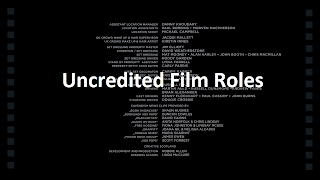
Film Billing Credits / Photo Credit: Studio Binder – Bruce Bisbey WHY DO ACTORS TAKE UNCREDITED ROLES? (In the Entertainment industry....